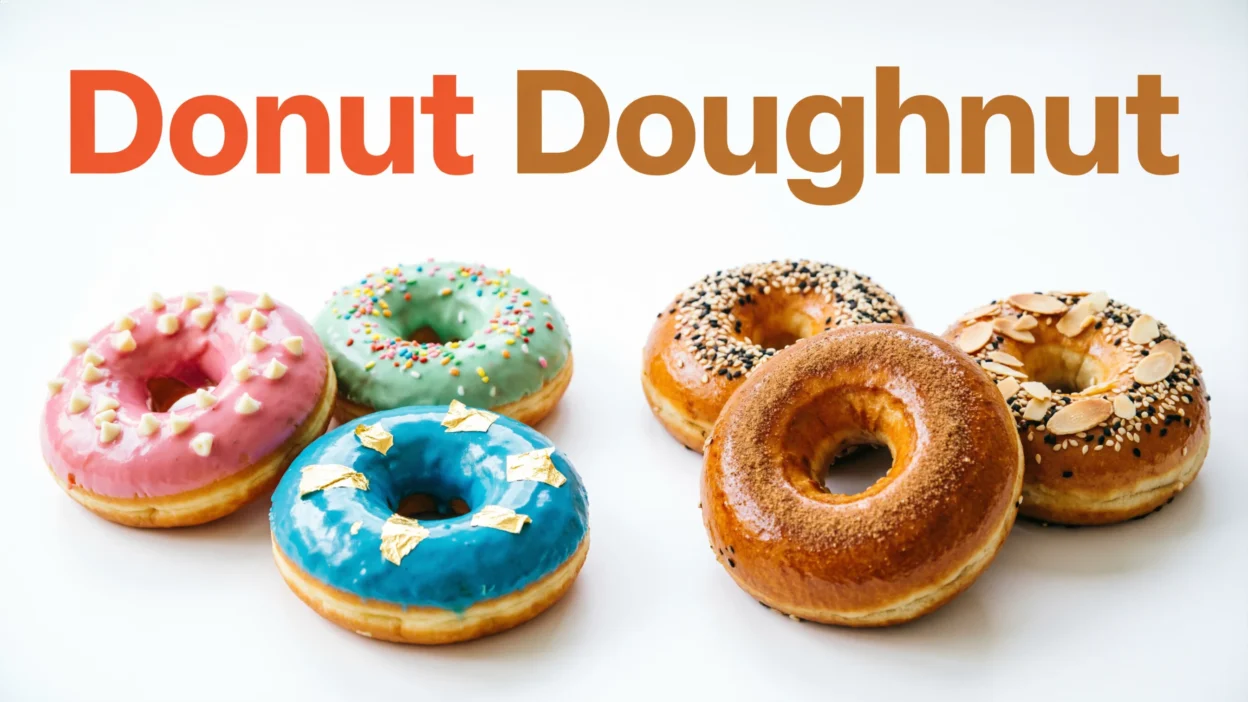
If you’ve ever ordered a sweet fried treat with a hole in the middle, you may have noticed two different spellings: donut and doughnut.
This often leaves people wondering which version is correct and whether there’s any real difference between them.
The short answer is that both donut and doughnut refer to the same delicious pastry. However, the choice of spelling depends on context, region, branding, and writing style.
In this guide, you’ll learn the meaning of each term, their history, key differences, examples, common mistakes, and which spelling you should use in different situations.
Quick Answer
- Doughnut is the traditional and original spelling.
- Donut is a simplified spelling that became popular in American English.
- Both words refer to the same fried sweet pastry.
- Doughnut is generally preferred in formal writing, while donut is widely used in everyday language and branding.
What Does Donut or Doughnut Mean?
A donut or doughnut is a sweet fried pastry typically made from dough and often glazed, iced, or filled with cream, jelly, or custard.
Common varieties include:
- Glazed doughnuts
- Chocolate doughnuts
- Filled doughnuts
- Cake doughnuts
- Ring-shaped doughnuts
- Jelly-filled doughnuts
Regardless of spelling, the meaning remains exactly the same.
Donut or Doughnut Explained
The word originally appeared as doughnut, combining:
- Dough = the mixture used to make baked or fried goods
- Nut = believed to refer to the small nut-like shape of early versions
Over time, Americans began shortening the spelling to donut, especially in advertising and popular culture.
Today, both spellings are accepted by major dictionaries, though doughnut remains the traditional form.
Historical Background
- Doughnut appeared first in English.
- Donut gained popularity during the 20th century.
- Businesses and brands helped popularize the shorter spelling.
- Both forms are now widely recognized.
Donut vs Doughnut: Key Differences
| Feature | Donut | Doughnut |
|---|---|---|
| Meaning | Sweet fried pastry | Sweet fried pastry |
| Correctness | Correct | Correct |
| Origin | Simplified spelling | Original spelling |
| Formal Writing | Less common | More common |
| Branding Usage | Very common | Less common |
| Length | Shorter | Longer |
The difference is mainly spelling rather than meaning.
Examples of Donut and Doughnut
Examples Using “Donut”
- I bought a chocolate donut for breakfast.
- The bakery sells fresh donuts every morning.
- She loves glazed donuts with coffee.
- We stopped for donuts on the way to work.
Examples Using “Doughnut”
- The doughnut was covered in powdered sugar.
- Fresh doughnuts are best when served warm.
- He ordered a jam-filled doughnut.
- The bakery specializes in handmade doughnuts.
Both sets of examples are equally correct.
American vs British English Usage
Unlike some spelling differences, the distinction between donut and doughnut is not strictly an American-versus-British English issue.
In American English
- Donut is extremely common.
- Used frequently in marketing and everyday writing.
- Often seen on menus and signs.
In British English
- Doughnut is generally more common.
- Frequently used in newspapers, books, and formal writing.
However, both spellings are understood worldwide.
Why Is “Donut” So Popular?
The popularity of donut is largely due to branding and convenience.
The shorter spelling is:
- Easier to read quickly
- Simpler to fit on signs and packaging
- More visually appealing for marketing
- Common in American advertising
Over time, the simplified spelling became deeply embedded in popular culture.
Common Mistakes People Make
Mistake #1: Thinking One Spelling Is Wrong
Many people assume only one spelling is correct.
Correct:
- Donut ✔
- Doughnut ✔
Both are accepted by modern dictionaries.
Mistake #2: Mixing Spellings in One Article
Consistency matters.
Less Professional:
- I bought a donut. The doughnut tasted great.
Better:
- I bought a donut. The donut tasted great.
- I bought a doughnut. The doughnut tasted great.
Choose one style and stick with it.
Mistake #3: Assuming Donut Is Slang
Some writers believe donut is informal slang.
In reality:
- Donut is an accepted dictionary spelling.
- It appears in professional publications.
- It is commonly used by major brands.
How to Remember the Difference
A simple memory trick:
- Doughnut contains the word dough, reminding you what the pastry is made from.
- Donut is the shorter, modern version.
Another tip:
- Formal writing → Doughnut
- Casual writing and branding → Donut
Related Terms and Synonyms
While there is no exact synonym for a doughnut, related bakery terms include:
- Pastry
- Fried dough
- Sweet roll
- Cruller
- Berliner
- Beignet
- Cake doughnut
- Filled pastry
These terms may vary depending on region and recipe.
Which Spelling Should You Use?
Use “Doughnut” When:
- Writing formally
- Following traditional spelling conventions
- Creating academic content
- Writing for audiences that prefer traditional English
Use “Donut” When:
- Writing casually
- Creating marketing content
- Targeting American audiences
- Referring to popular brand styles
Both choices are correct, so your audience and purpose should guide your decision.
Is Donut or Doughnut Better for SEO?
The best spelling often depends on your target audience.
For American Audiences
Popular search phrases include:
- Donut shop
- Donut recipe
- Donut delivery
- Best donuts near me
For Global or Traditional Audiences
You may also encounter:
- Doughnut recipe
- Homemade doughnuts
- Chocolate doughnuts
- Doughnut bakery
For broader SEO reach, many content creators naturally include both spellings within the article.
Why Understanding Donut or Doughnut Matters
Knowing the difference helps you communicate more effectively and maintain consistency in your writing.
Whether you’re creating blog content, bakery menus, social media posts, or marketing materials, choosing the appropriate spelling helps match audience expectations and strengthens professionalism.
The distinction may seem small, but consistent language choices contribute to better readability and user trust.
Frequently Asked Questions (FAQs)
1. Is donut or doughnut correct?
Both spellings are correct and widely accepted.
2. Which spelling came first?
Doughnut is the original spelling and has been used for much longer.
3. Why do Americans say donut?
The shorter spelling became popular through advertising, branding, and everyday usage.
4. Is doughnut more formal than donut?
Generally, yes. Doughnut is often preferred in formal and traditional writing.
5. Do donut and doughnut mean different things?
No. They refer to the exact same pastry.
6. Which spelling is more common today?
In American English, donut is often more common in everyday use, while doughnut remains widely used in formal contexts.
7. Should I use donut or doughnut in a blog post?
Either is acceptable, but stay consistent throughout the article.
8. Does Google recognize both spellings?
Yes. Search engines understand both donut and doughnut as spelling variations of the same word.
Summary
The debate between donut or doughnut is really about spelling preference rather than meaning. Both words refer to the same sweet fried pastry enjoyed around the world. Doughnut is the original and more traditional spelling, while donut is a modern simplified version that has become especially popular in American English and branding.
When deciding which spelling to use, consider your audience, tone, and purpose. Formal and traditional writing often favors doughnut, while marketing, casual writing, and modern usage frequently lean toward donut. Whichever version you choose, consistency is the key to professional and effective communication.
Actionable Takeaway
Choose doughnut if you’re writing formal, traditional, or academic content. Choose donut for casual writing, marketing, or American audiences. Most importantly, pick one spelling and use it consistently throughout your content.