Have you ever typed “seel” and wondered whether it should actually be “seal”? You’re not alone. These two words look similar, but only one is commonly used in modern English. This confusion often occurs because English contains many words with similar spellings but very different meanings.
If you’re trying to decide between seel or seal, the good news is that the answer is usually straightforward. In this guide, you’ll learn the correct spelling, meanings, examples, common mistakes, and when each word may be appropriate so you can use them confidently in your writing.
Quick Answer
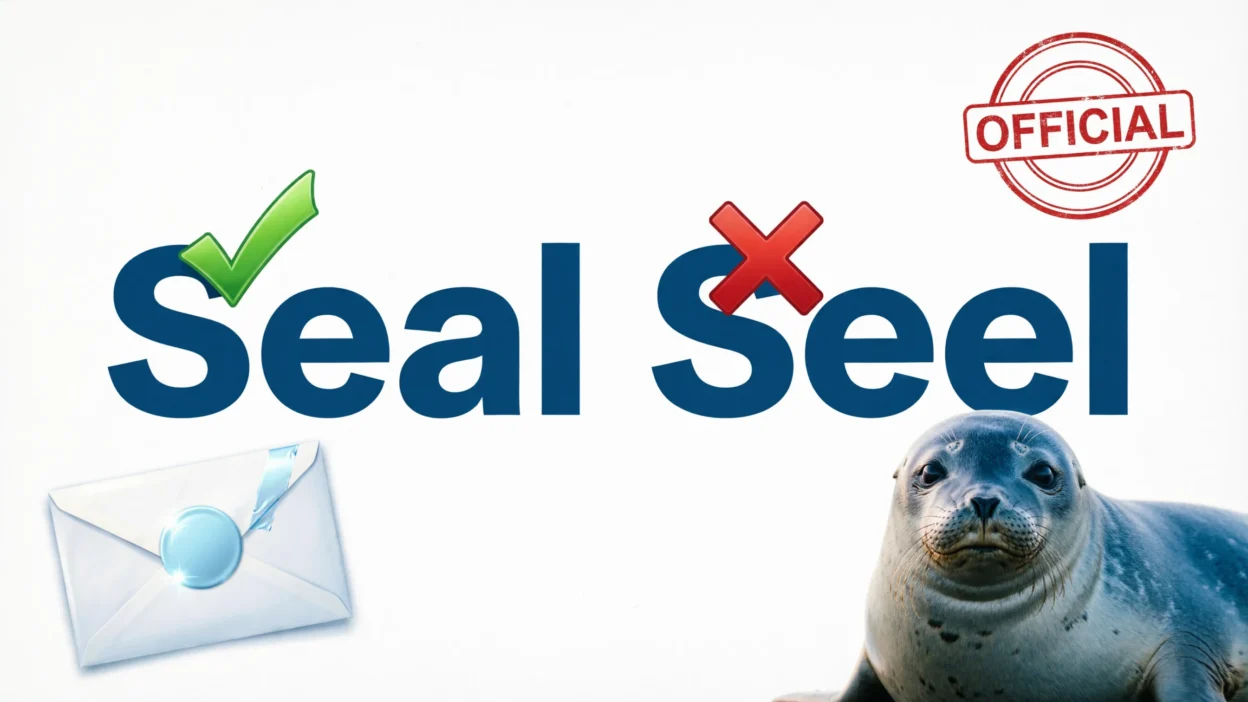
“Seal” is the correct word in most situations. “Seel” is a rare and archaic word that is seldom used in modern English.
✅ Seal the envelope.
✅ A seal lives in the ocean.
❌ Seel the envelope.
For everyday writing, business communication, academic work, and online content, seal is almost always the word you need.
What Does “Seal” Mean?
The word seal has several meanings in English, making it a versatile and commonly used word.
As a noun, seal can refer to:
- A marine mammal
- An official stamp or emblem
- A fastening that closes something securely
Examples:
- We saw a seal swimming near the shore.
- The document carried the official seal of the organization.
- Check the rubber seal around the window.
As a verb, seal means to close, secure, or finalize something.
Examples:
- Please seal the package before shipping it.
- The company sealed the agreement yesterday.
- Make sure to seal the container tightly.
What Does “Seel” Mean?
Seel is a real English word, but it is considered archaic and rarely appears in modern conversation or writing.
Historically, seel referred to:
- Closing the eyes of a hawk by sewing them partially shut during falconry training.
- Blinding or shutting someone’s eyes.
Examples from historical contexts:
- The falconer would seel the bird during training.
- Ancient texts occasionally mention seeling a hawk.
Because the word is outdated, most people will never need to use it.
Seel vs Seal: Comparison Table
| Feature | Seal | Seel |
|---|---|---|
| Common in Modern English | Yes | No |
| Found in Everyday Writing | Yes | Rarely |
| Can Be a Noun | Yes | No |
| Can Be a Verb | Yes | Yes |
| Archaic Word | No | Yes |
| Recommended for Most Writers | Yes | No |
Why Seal Is Usually the Correct Choice
In modern English, seal appears in everyday communication, professional documents, educational materials, and online content.
Common uses include:
- Seal an envelope
- Seal a deal
- Seal a container
- Official seal
- Waterproof seal
- Seal of approval
Because these expressions are widely recognized, using seal ensures your writing is clear and understood by readers.
Examples of Seal in Sentences
Referring to Closing Something
- Please seal the box before mailing it.
- She used tape to seal the package.
- Make sure the lid is properly sealed.
Referring to Agreements
- The two companies sealed the partnership agreement.
- A handshake helped seal the deal.
Referring to Animals
- The children watched a seal resting on the rocks.
- A baby seal followed its mother through the water.
Referring to Official Approval
- The certificate bears the official seal of the institution.
- The king’s seal confirmed the document’s authenticity.
Examples of Seel in Sentences
Since seel is archaic, its usage is mostly limited to historical or literary contexts.
Examples:
- The falconer chose to seel the hawk temporarily.
- The old manuscript described how birds were seeled during training.
- Historians occasionally encounter the term seel in medieval texts.
These examples are uncommon in modern English.
Common Mistakes People Make
Mistake #1: Using Seel Instead of Seal
❌ Please seel the envelope.
✅ Please seal the envelope.
Mistake #2: Assuming Seel Is the Modern Spelling
❌ The company seeled the contract.
✅ The company sealed the contract.
Mistake #3: Confusing Rare Historical Terms with Everyday English
❌ Use seel to close the container.
✅ Use seal to close the container.
For almost all modern situations, seal is the correct choice.
American vs British English
There is no significant difference between American and British English regarding seal and seel.
Examples:
American English:
- Please seal the package.
British English:
- Please seal the parcel.
In both varieties of English, seal remains the standard spelling and usage.
Likewise, seel is considered archaic in both American and British English.
When Might You Encounter “Seel”?
Although rare, you may find seel in:
- Historical documents
- Medieval literature
- Falconry texts
- Academic studies of old English terminology
- Classical poetry
Outside these specialized contexts, readers generally expect seal.
Easy Memory Trick
Remember this simple rule:
If you’re closing, securing, approving, or talking about the marine animal, use “seal.”
Think:
- Seal the envelope.
- Seal the deal.
- Seal the container.
- Seal in the ocean.
If you’re not reading a historical falconry book, you probably don’t need seel.
Related Words and Synonyms
Related to seal:
- Close
- Secure
- Fasten
- Lock
- Protect
- Approve
- Confirm
- Authenticate
- Stamp
- Certify
Related phrases:
- Seal of approval
- Sealed agreement
- Airtight seal
- Official seal
- Seal the deal
Frequently Asked Questions (FAQs)
Is seal or seel correct?
For modern English, seal is almost always correct. Seel is an archaic word rarely used outside historical contexts.
Is seel a real word?
Yes. Seel is a legitimate English word, but it is old-fashioned and rarely used today.
What does seal mean?
Seal can refer to closing something securely, an official stamp, or a marine mammal.
Can I use seel instead of seal?
No. In modern writing, replacing seal with seel is generally considered incorrect.
Why do people confuse seel and seal?
The words sound similar and differ by only one letter, making them easy to mix up when spelling.
Is seel used in American English?
It exists in dictionaries but is considered archaic and extremely uncommon in modern American English.
Is seal a noun and a verb?
Yes. Seal can function as both a noun and a verb depending on the sentence.
Which word should I use in professional writing?
Always use seal unless you’re specifically discussing historical falconry or archaic language.
Summary
If you’re deciding between seel or seal, the correct choice for nearly every modern situation is seal. It can refer to securing something, confirming an agreement, an official stamp, or even the marine animal. It is widely used and recognized in both American and British English.
While seel is technically a real word, it belongs mainly to historical and literary contexts. Most readers will rarely encounter it, and using it accidentally can make your writing appear incorrect. For everyday communication, professional documents, and academic writing, seal is the word you should choose.
Actionable Takeaway
Whenever you’re writing about closing, securing, approving, or referring to the ocean animal, use seal. A simple rule to remember is: “Seal is modern; seel is historical.” Following this guideline will help you avoid a common spelling mistake and write with confidence.