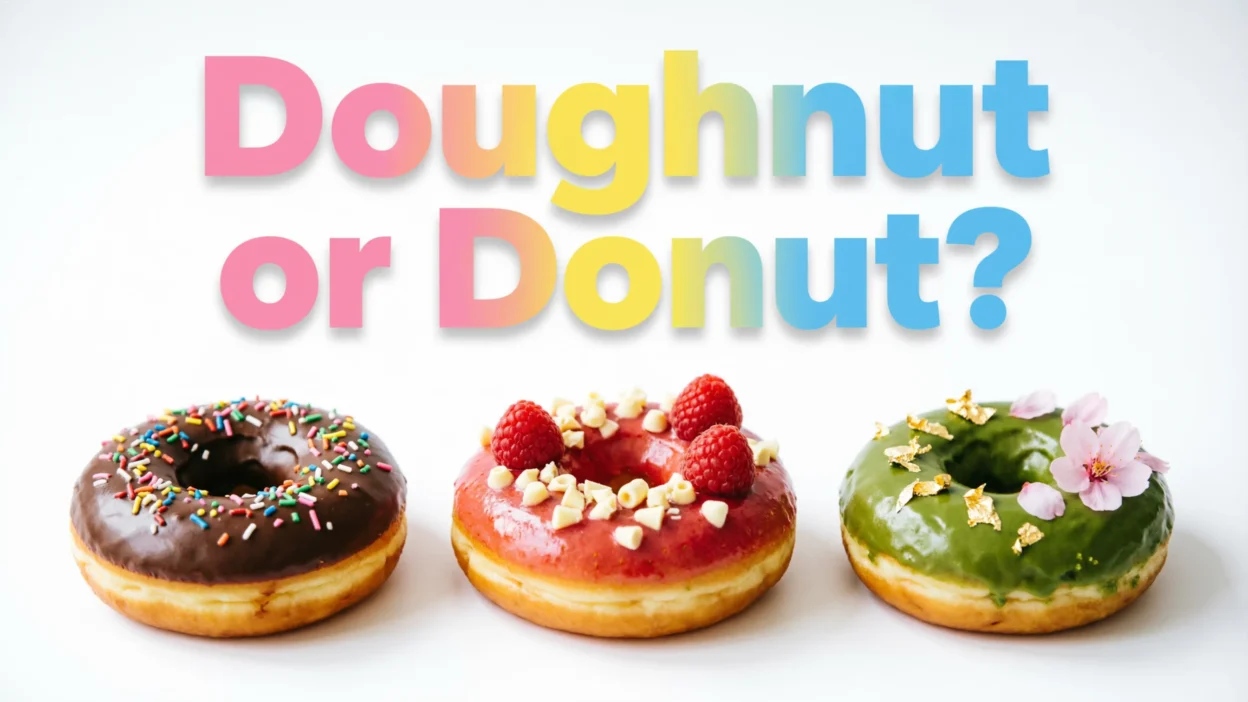
Have you ever wondered whether doughnut or donut is the correct spelling? You’re not alone. This delicious pastry has sparked a surprising amount of spelling confusion, especially because both versions appear in dictionaries, menus, advertisements, and everyday writing.
Whether you’re writing a blog post, creating marketing content, or simply trying to improve your English, understanding the difference between doughnut and donut can help you choose the right spelling for your audience.
In this guide, you’ll learn the meaning, usage, history, examples, and regional preferences behind these two spellings.
Quick Answer
Both doughnut and donut are correct spellings.
- Doughnut is the traditional and original spelling.
- Donut is a simplified spelling that became popular in American English.
Today, donut is widely used in casual, commercial, and American contexts, while doughnut remains common in formal writing and many English-speaking countries.
What Does Doughnut or Donut Mean?
A doughnut (or donut) is a sweet fried or baked pastry, typically ring-shaped or filled with jam, cream, custard, or other fillings.
The word refers to a popular dessert enjoyed around the world and commonly served with coffee, tea, or milk.
Simple Definition
Doughnut/Donut = A sweet pastry made from dough, usually fried and often glazed, sugared, or filled.
Doughnut vs Donut: Comparison Table
| Feature | Doughnut | Donut |
|---|---|---|
| Original spelling | Yes | No |
| Modern spelling | Yes | Yes |
| Dictionary accepted | Yes | Yes |
| Common in American English | Less common | More common |
| Common in British English | More common | Less common |
| Formal writing | Preferred | Acceptable |
| Marketing and branding | Less common | Very common |
| Reader familiarity | High | Very high |
Why Is There Confusion About Doughnut and Donut?
The confusion exists because both spellings are officially recognized and widely used.
Historically, doughnut came first. The word combines:
- Dough = the pastry mixture
- Nut = referring to the small, nut-like shape of early doughnuts
Over time, Americans began shortening the spelling to donut. The shorter version gained popularity through advertising, signage, and major food chains.
Today, both spellings are considered correct, but preferences vary by region and context.
Examples of Doughnut and Donut in Sentences
Everyday Examples
- I bought a chocolate doughnut for breakfast.
- She ordered a strawberry-filled donut.
- My favorite snack is a glazed doughnut.
- The bakery sells fresh donuts every morning.
Professional Examples
- The café introduced a new gourmet doughnut selection.
- The restaurant’s menu features artisan donuts.
Marketing Examples
- Free donut with every coffee purchase.
- Try our freshly baked doughnuts today.
Is Donut Ever Incorrect?
No. Donut is not incorrect.
Major dictionaries recognize donut as a valid spelling of doughnut. In fact, many Americans encounter the word donut more often than doughnut.
However, in highly formal writing or publications that follow traditional spelling conventions, doughnut may still be preferred.
Example
Acceptable:
- I ate a glazed donut.
Also acceptable:
- I ate a glazed doughnut.
The choice largely depends on audience, region, and style.
American vs British English
American English
In the United States, donut is extremely common.
You’ll often see:
- Donut shops
- Donut advertisements
- Donut menus
- Donut packaging
Many American brands prefer the shorter spelling because it feels modern and easy to read.
Examples:
- I grabbed a coffee and a donut.
- The bakery specializes in gourmet donuts.
British English
In the United Kingdom and many other English-speaking countries, doughnut remains the more traditional spelling.
Examples:
- She bought a jam-filled doughnut.
- The bakery offers homemade doughnuts.
Key Takeaway
- American English: Usually prefers donut.
- British English: Usually prefers doughnut.
Both spellings are widely understood worldwide.
Common Mistakes to Avoid
Mistake #1: Thinking One Spelling Is Wrong
Many people assume only one version is correct.
In reality, both doughnut and donut are accepted spellings.
Mistake #2: Mixing Spellings in the Same Article
Choose one spelling and stay consistent.
Incorrect:
- I bought a doughnut.
- Later, I ate another donut.
Better:
- I bought a doughnut.
- Later, I ate another doughnut.
Or:
- I bought a donut.
- Later, I ate another donut.
Mistake #3: Ignoring Your Audience
If you’re writing for a British audience, doughnut may feel more natural.
If you’re targeting an American audience, donut often works better.
Synonyms and Related Terms
While there isn’t a perfect synonym, related words include:
- Pastry
- Sweet treat
- Fried dough
- Bakery item
- Dessert
- Glazed pastry
- Filled pastry
- Ring pastry
- Baked good
- Confection
Related LSI Keywords
- Chocolate donut
- Glazed doughnut
- Jelly doughnut
- Cream-filled donut
- Donut shop
- Bakery pastry
- Sweet snack
- Breakfast pastry
- Gourmet doughnuts
- Homemade donuts
When Should You Use Doughnut or Donut?
In Everyday Writing
Either spelling works.
Examples:
- I love chocolate donuts.
- I bought fresh doughnuts this morning.
In Professional Writing
Follow your style guide.
Examples:
- British publication → Doughnut
- American publication → Donut
In Marketing and Branding
Many businesses choose donut because it is shorter, modern, and easier to fit on signs and packaging.
Examples:
- Gourmet Donuts
- Fresh Donut Deals
- Donut Delivery Service
SEO and Writing Tips
If you’re creating online content, consider your audience.
For U.S.-focused websites:
- Use donut as the primary keyword.
- Mention doughnut naturally.
For international audiences:
- Use both spellings strategically.
Common search terms include:
- doughnut or donut
- donut meaning
- doughnut meaning
- donut vs doughnut
- correct spelling of donut
- doughnut spelling
Including both versions can help capture broader search traffic while maintaining readability.
Frequently Asked Questions (FAQs)
1. Which is correct: doughnut or donut?
Both spellings are correct and recognized by major dictionaries.
2. What is the original spelling?
Doughnut is the original and traditional spelling.
3. Why do Americans use donut?
The simplified spelling became popular through advertising, branding, and everyday usage.
4. Is donut informal?
Not necessarily. It is widely accepted in both casual and professional contexts, especially in the United States.
5. Is doughnut more formal?
Many style guides consider doughnut the more traditional and formal spelling.
6. Which spelling is more common worldwide?
Both are common, but donut has become increasingly popular due to its widespread use in American culture and media.
7. Should I use donut or doughnut for SEO?
Using both naturally within your content can help target a wider range of search queries.
8. Do dictionaries accept both spellings?
Yes. Most major dictionaries list both doughnut and donut as correct spellings.
Summary
When comparing doughnut or donut, both spellings are correct and widely accepted. Doughnut is the original spelling that remains popular in British English and more traditional writing, while donut has become the preferred spelling in American English and modern branding.
The best choice depends on your audience and writing style. If you’re targeting U.S. readers, donut often feels more natural. If you’re writing for an international or British audience, doughnut may be the better option. Regardless of which spelling you choose, consistency throughout your content is the key to professional writing.
Actionable Takeaway
Remember this simple rule:
- Use donut for most American audiences and modern marketing content.
- Use doughnut for traditional, British, or formal contexts.
Since both spellings are correct, focus on consistency and audience expectations rather than worrying about choosing the “wrong” version.