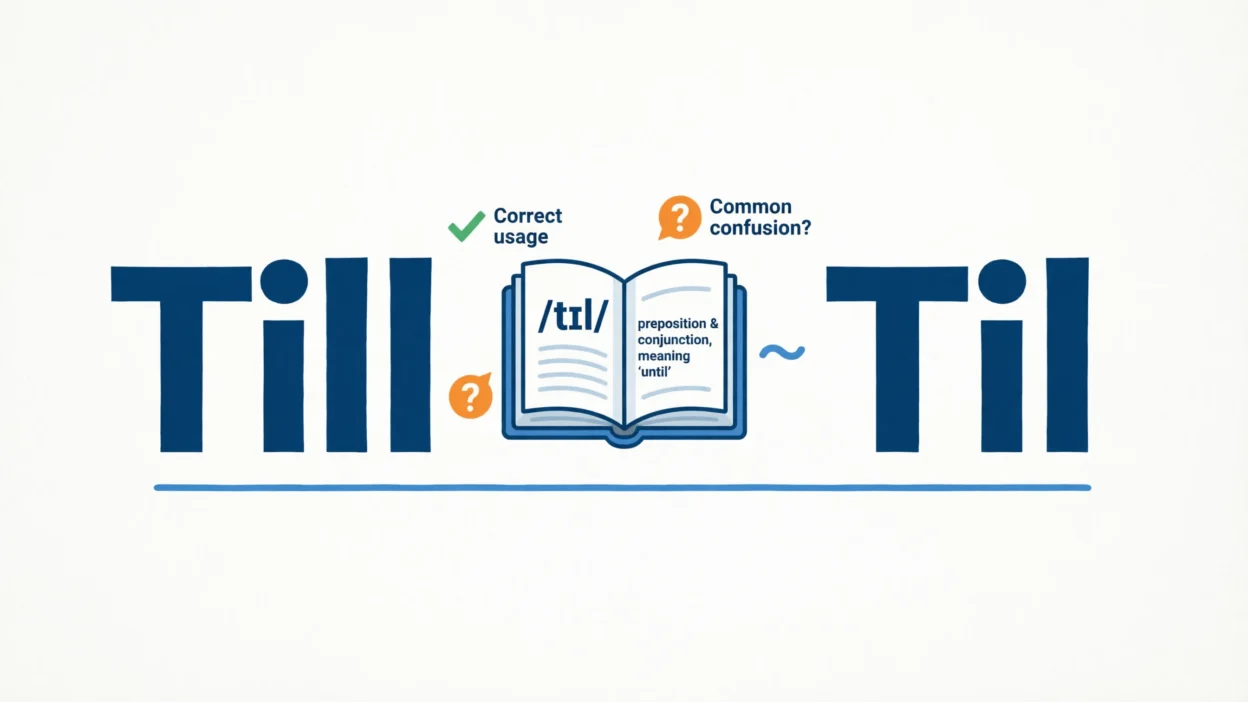
Have you ever paused while writing and wondered whether you should use till or til? You’re not alone.
These two words often cause confusion because they look similar and are frequently used interchangeably in casual writing, text messages, and online conversations.
The good news is that understanding the difference between till and til is surprisingly simple.
In this guide, you’ll learn which spelling is correct, their meanings, examples, common mistakes, and how to use each one confidently in both formal and informal writing.
Quick Answer
- Till is the traditional and correct word meaning “up to” or “until.
- Til is considered a shortened, informal variant of until, but it is less widely accepted.
- In formal writing, till is usually preferred over til.
- Both words generally mean the same thing, but till has a much longer history in English.
What Does Till or Til Mean?
Both till and til are used to indicate a point in time up to which something continues.
Examples:
- Wait here till I come back.
- The store is open till midnight.
- I’ll stay til the meeting ends.
In these examples, the words mean the same thing as until.
Till or Til Explained
Many people assume that till is simply a shortened version of until. Interestingly, the opposite is true.
The word till existed in English centuries before until became common. It comes from Old English and has been used for hundreds of years as a complete word in its own right.
The spelling til emerged later as an informal shortening. While it appears in casual writing, many dictionaries and style guides still favor till because it is the original word rather than an abbreviation.
Historical Background
- Till dates back to Old English.
- Until developed later as a variation.
- Til became popular in informal writing and advertising.
- Many professional editors still prefer till in standard English.
Till vs Til: Key Differences
| Feature | Till | Til |
|---|---|---|
| Meaning | Up to a specific time | Up to a specific time |
| Formality | More accepted in formal writing | More informal |
| Historical Usage | Original English word | Later shortened form |
| Dictionary Acceptance | Widely accepted | Accepted but less preferred |
| Academic Writing | Recommended | Usually avoided |
Although both can communicate the same meaning, till is generally the safer choice.
Examples of Till and Til
Examples Using “Till”
- I’ll wait till you arrive.
- The office remains open till 6 PM.
- Stay here till further notice.
- She worked till midnight to finish the project.
Examples Using “Til”
- I’ll be busy til Friday.
- We talked til dawn.
- The sale runs til the end of the month.
- I’ll stay til everyone leaves.
While these examples are understandable, many editors would replace til with till or until in professional content.
Common Mistakes People Make
Mistake #1: Thinking Till Is Incorrect
Many people mistakenly believe that till is an abbreviation of until.
Incorrect assumption:
- Till is a shortened form and therefore less formal.
Correct:
- Till is actually the older and original word.
Mistake #2: Using Til in Formal Writing
While til is widely understood, it may appear too casual in professional documents.
Less Preferred:
- The application remains open til May 1.
Better:
- The application remains open till May 1.
- The application remains open until May 1.
Mistake #3: Confusing Till with the Cash Register Meaning
The word till can also refer to a cash register drawer.
Example:
- The cashier counted the money in the till.
Context usually makes the meaning clear.
How to Remember the Difference
A simple trick is:
- Till = Traditional and formal.
- Til = Texting and casual writing.
Another easy reminder:
If you’re writing an email, report, essay, or article, choose till or until.
If you’re sending a quick text message to friends, til will usually be understood.
Related Terms and Synonyms
Several words can replace till or til depending on the context:
- Until
- Up to
- Before
- Through
- Pending
- Awaiting
- Prior to
Examples:
- Wait until tomorrow.
- Stay here up to noon.
- Finish the work before Friday.
Using these alternatives can improve sentence variety and readability.
Till vs Until: Which Should You Use?
Many writers also wonder whether till or until is better.
Use “Till” When:
- You want a shorter word.
- The tone is conversational.
- You’re writing everyday English.
Use “Until” When:
- Writing formal documents.
- Academic writing.
- Business communication.
- Professional publications.
Examples:
- Informal: I’ll wait till you arrive.
- Formal: The contract remains valid until December 31.
Both are grammatically correct.
American vs British English Usage
Unlike many spelling differences, till and til are used in both American and British English.
However:
- Till is widely accepted in both varieties.
- Til tends to appear more often in informal American writing.
- Professional writers in both regions usually prefer till or until.
Therefore, regional differences are less important than formality in this case.
Why Understanding Till or Til Matters
Choosing the right word improves clarity and professionalism.
Whether you’re writing emails, blog posts, academic papers, or social media updates, knowing the distinction helps you match your language to the situation.
Using till correctly can also help avoid criticism from editors and readers who may view til as overly informal.
Frequently Asked Questions (FAQs)
1. Is till or til correct?
Both are correct, but till is more widely accepted and preferred in formal writing.
2. Is till short for until?
No. Till is actually older than until and is a complete word by itself.
3. Can I use til in professional writing?
It’s generally better to use till or until in professional and academic writing.
4. Which is more common: till or til?
Till is more common in standard written English.
5. Is til considered a spelling mistake?
Not usually. Most dictionaries recognize it, but many style guides discourage its use in formal contexts.
6. What’s the difference between till and until?
There is no difference in meaning. Until is simply more formal and slightly more common in professional writing.
7. Do Americans use till or til?
Americans use both, but till remains the preferred standard spelling.
8. Should bloggers use till or til?
For SEO content and professional blogs, till is usually the better choice.
Summary
The difference between till and til comes down primarily to usage and formality rather than meaning. Both words mean “up to a certain time,” but till is the original English word and is more widely accepted in formal, academic, and professional writing. Til, while recognized by many dictionaries, is generally viewed as a casual alternative.
When in doubt, choose till or until for the safest and most professional result. Understanding this distinction will help you write more confidently, avoid common mistakes, and ensure your content matches the expectations of your audience.
Actionable Takeaway
If you’re writing for work, school, blogging, or publication, use till or until. Reserve til for casual texts, social media posts, and informal conversations where a relaxed tone is appropriate.