Have you ever typed “perfer” and wondered whether it was correct, or if the proper word was “prefer”? You’re not alone. This is one of the most common English spelling mistakes because the pronunciation can make the letters seem confusing.
If you’re searching for the difference between perfer or prefer, the answer is simple: “prefer” is the correct spelling, while “perfer” is a misspelling. In this guide, you’ll learn the meaning of prefer, see real-world examples, understand why people make this mistake, and discover easy ways to remember the correct spelling every time.
Quick Answer
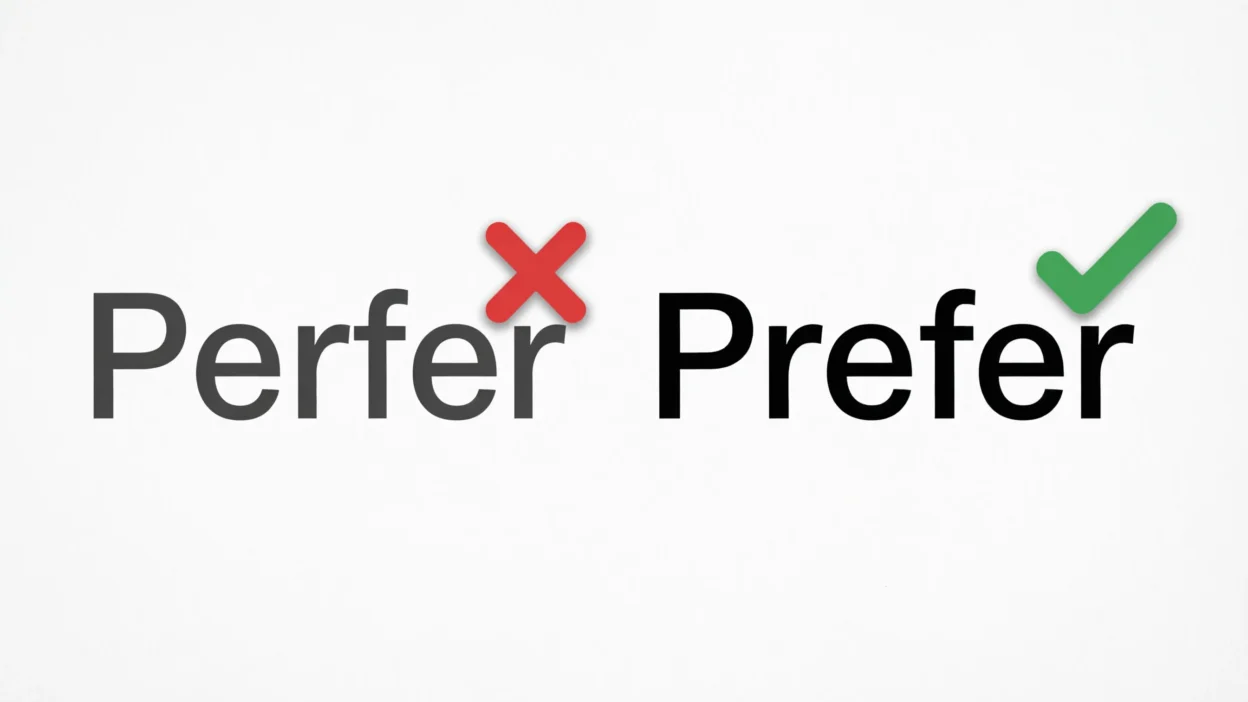
Prefer is the correct English word.
❌ Perfer – Incorrect spelling
✅ Prefer – Correct spelling
Meaning: To like, choose, or want one thing more than another.
Example: I prefer tea over coffee.
Whenever you’re writing in English, always use prefer and avoid perfer.
What Does “Prefer” Mean?
The word prefer is a verb that means choosing one option over another because you like it better, find it more suitable, or consider it more beneficial.
People use prefer every day when talking about choices, opinions, habits, and personal tastes.
Simple Definition
Prefer = To like something more than something else.
Examples
- I prefer reading books to watching television.
- She prefers working in the morning.
- We prefer homemade meals over fast food.
- They prefer traveling by train rather than flying.
- He prefers blue shirts instead of black ones.
In each example, the person is selecting one option because it is more desirable.
Why Do People Write “Perfer” Instead of “Prefer”?
The mistake usually happens because of letter placement confusion.
When speaking quickly, some learners hear the word as “per-fer”, which leads them to type the letters in the wrong order.
The correct spelling pattern is:
P-R-E-F-E-R
Many people accidentally write:
P-E-R-F-E-R
This small switch of letters creates the incorrect spelling perfer.
Common Reasons for the Mistake
- Fast typing
- Pronunciation confusion
- Lack of proofreading
- English learners memorizing sounds instead of spelling
- Autocorrect not catching every error
Fortunately, once you recognize the correct pattern, the mistake becomes much easier to avoid.
Perfer vs Prefer: Comparison Table
| Feature | Perfer | Prefer |
|---|---|---|
| Correct English Word | ❌ No | ✅ Yes |
| Found in Dictionaries | ❌ No | ✅ Yes |
| Accepted in Formal Writing | ❌ No | ✅ Yes |
| Used in Academic Writing | ❌ No | ✅ Yes |
| Meaning | None | To choose or like more |
| Grammar Status | Misspelling | Correct Verb |
The comparison clearly shows that prefer is the only correct choice.
How to Remember the Correct Spelling of Prefer
A simple memory trick can help.
Think of the phrase:
“PRE comes before FER.”
The correct order is:
PRE + FER = PREFER
Another helpful reminder:
The word begins with “pre”, the same beginning found in words such as:
- Preview
- Prepare
- Prevent
- Predict
Since many English words start with pre-, remembering this pattern can make the spelling easier.
Examples of Prefer in Everyday Sentences
Here are practical examples showing how native speakers use the word.
Preferences About Food
- I prefer pizza to burgers.
- She prefers fresh fruit over candy.
- We prefer home-cooked meals.
Preferences About Work
- He prefers remote work.
- They prefer flexible schedules.
- I prefer working independently.
Preferences About Lifestyle
- Some people prefer city life.
- Others prefer living in rural areas.
- My parents prefer quiet neighborhoods.
Preferences About Entertainment
- I prefer documentaries to reality shows.
- She prefers listening to podcasts.
- They prefer reading novels.
These examples demonstrate how versatile the word is in daily communication.
Grammar Rules for Using Prefer
The verb prefer follows several common sentence patterns.
Prefer + Noun
- I prefer coffee.
- She prefers chocolate.
Prefer + Verb (-ing Form)
- I prefer reading.
- He prefers walking.
Prefer A to B
- I prefer tea to coffee.
- She prefers summer to winter.
Prefer to + Verb
- I prefer to study at night.
- We prefer to travel early.
Using these structures correctly helps your English sound more natural and professional.
Common Mistakes With Prefer
Many learners make mistakes not only with spelling but also with grammar.
Mistake 1: Writing Perfer
❌ I perfer tea.
✅ I prefer tea.
Mistake 2: Wrong Comparison Structure
❌ I prefer tea than coffee.
✅ I prefer tea to coffee.
Mistake 3: Incorrect Verb Form
❌ She prefer reading.
✅ She prefers reading.
Mistake 4: Missing Subject Agreement
❌ He prefer pizza.
✅ He prefers pizza.
Avoiding these common errors can improve both your written and spoken English.
Synonyms of Prefer
Using related words can make your writing more varied and engaging.
Some common synonyms include:
- Choose
- Favor
- Like better
- Select
- Opt for
- Prioritize
- Desire
- Lean toward
- Appreciate more
- Value
Examples
- I choose tea over coffee.
- She favors online learning.
- We opt for sustainable products.
Although these words have similar meanings, prefer remains the most direct and commonly used term when comparing choices.
American vs British English: Is There Any Difference?
Good news—there is no spelling difference between American and British English for this word.
American English
✅ Prefer
British English
✅ Prefer
Unlike words such as:
- Color / Colour
- Favorite / Favourite
- Center / Centre
The word prefer is spelled exactly the same in both varieties of English.
This means you can confidently use prefer whether you’re writing for American, British, Canadian, Australian, or international audiences.
Why Correct Spelling Matters
Correct spelling improves:
- Professional credibility
- Academic performance
- Search engine visibility
- Reader trust
- Communication clarity
Misspellings such as perfer can distract readers and make content appear less polished.
Whether you’re writing emails, blog posts, school assignments, or business documents, using the correct spelling demonstrates attention to detail.
Frequently Asked Questions (FAQs)
Is perfer a real word?
No. Perfer is not a recognized English word. It is simply a misspelling of prefer.
Which spelling is correct: perfer or prefer?
Prefer is the correct spelling in all forms of English.
What does prefer mean?
Prefer means choosing, liking, or wanting one thing more than another.
How do you use prefer in a sentence?
Example: I prefer tea to coffee.
Why do people spell prefer as perfer?
The mistake usually occurs because people reverse the letters while typing or because of pronunciation confusion.
Is prefer a verb?
Yes. Prefer is a verb that expresses choice or preference.
Is prefer used in formal writing?
Yes. It is widely used in academic, professional, and everyday writing.
Is there a British spelling of prefer?
No. Both American and British English use the same spelling: prefer.
Summary
When comparing perfer or prefer, the answer is straightforward: prefer is the correct spelling, and perfer is incorrect. The word prefer means choosing, liking, or valuing one thing more than another. It is commonly used in everyday conversations, professional communication, academic writing, and business contexts.
Remember that the correct spelling starts with “pre”, just like prepare, predict, and prevent. Whenever you’re unsure, double-check your spelling and use prefer confidently. Consistently using the correct form will make your writing clearer, more professional, and easier for readers to trust.
Actionable Takeaway
The next time you write this word, pause for a quick spelling check: P-R-E-F-E-R = Prefer. Save this simple rule in memory and practice using prefer in daily sentences. The more often you use it correctly, the more natural it will become.