Have you ever written “ment” when you actually meant “meant”? If so, you’re not alone. This is a common spelling confusion because both words sound very similar when spoken, leading many English learners and native speakers to wonder which version is correct.
If you’re searching for the difference between meant or ment, the answer is simple: “meant” is the correct spelling, while “ment” is usually a misspelling when used as the past tense of “mean.”
In this guide, you’ll learn the meaning of meant, see practical examples, discover why people confuse these words, and learn easy tricks to remember the correct spelling.
Quick Answer
Meant is the correct spelling when referring to the past tense of the verb mean.
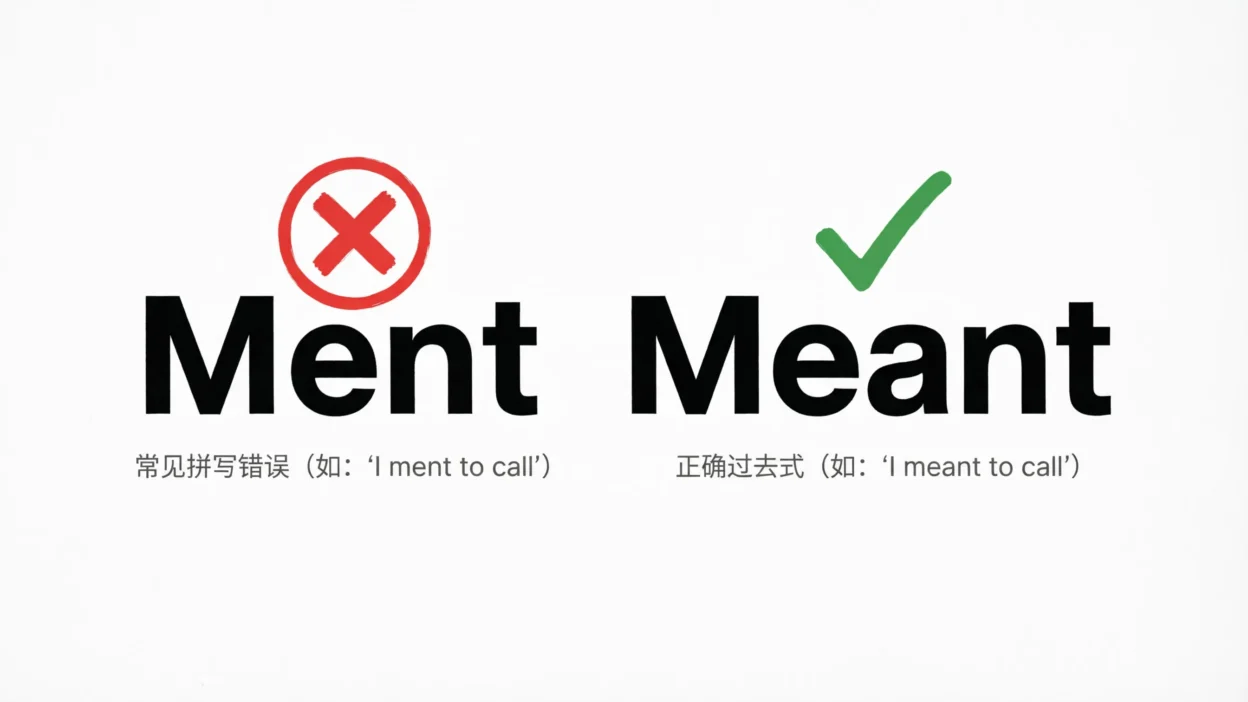
❌ Ment – Incorrect spelling (in this context)
✅ Meant – Correct spelling
Meaning: Intended, signified, or wanted to express something.
Example: I meant to call you yesterday.
Always use meant when talking about something that was intended or expressed in the past.
What Does “Meant” Mean?
The word meant is the past tense and past participle form of the verb mean.
It is used when talking about something that was intended, signified, indicated, or expressed in the past.
Simple Definition
Meant = Intended, signified, or wanted to express.
Examples
- I meant what I said.
- She meant no harm.
- They meant to arrive earlier.
- We never meant to upset anyone.
- He meant every word of his apology.
In each sentence, meant refers to an intention, message, or purpose from the past.
Why Do People Write “Ment” Instead of “Meant”?
The confusion occurs because meant and ment are often pronounced similarly in everyday speech.
When people hear the word, they may assume it is spelled exactly as it sounds and leave out the letter “a.”
Common Reasons for the Mistake
- Pronunciation-based spelling
- Fast typing
- Lack of proofreading
- English learners relying on sound rather than spelling
- Autocorrect not detecting every error
Since English spelling doesn’t always match pronunciation, mistakes like ment are very common.
Meant vs Ment: Comparison Table
| Feature | Ment | Meant |
|---|---|---|
| Correct English Word (Past Tense of Mean) | ❌ No | ✅ Yes |
| Accepted in Standard English | ❌ No | ✅ Yes |
| Found in Dictionaries as Past Tense of Mean | ❌ No | ✅ Yes |
| Appropriate for Formal Writing | ❌ No | ✅ Yes |
| Meaning | None in this context | Intended or signified |
| Grammar Status | Misspelling | Correct Verb Form |
The comparison makes it clear that meant is the correct choice when referring to the past tense of mean.
How to Remember the Correct Spelling of Meant
A simple trick is to remember that mean keeps its letter “a” when it changes to the past tense.
Think of it this way:
Mean → Meant
The letter “a” remains in the word.
Easy Memory Trick
Remember the sentence:
“What I mean today, I meant yesterday.”
Both words contain the letter “a.”
This can help you avoid accidentally writing ment.
Examples of Meant in Everyday Sentences
Here are some natural examples of how native English speakers use meant.
Personal Conversations
- I meant to text you last night.
- She meant every word she said.
- We meant well.
Apologies and Intentions
- He meant no offense.
- They never meant to hurt anyone.
- I didn’t mean it, and I certainly never meant to cause trouble.
School and Work Situations
- The teacher meant that the assignment was due Friday.
- My manager meant that we should start earlier.
- The instructions meant exactly what they stated.
Relationships and Emotions
- You meant a lot to me.
- She meant everything to her family.
- His words meant more than he realized.
These examples show how frequently meant appears in everyday English.
Grammar Rules and Usage
The word meant is used as both the past tense and past participle of mean.
Present Tense
- I mean what I say.
- She means well.
Past Tense
- I meant what I said.
- She meant well.
Past Participle
- I have meant to call you.
- They had meant to help.
Understanding these forms helps you use the word accurately in writing and conversation.
Common Mistakes
Mistake 1: Writing Ment Instead of Meant
❌ I ment to email you.
✅ I meant to email you.
Mistake 2: Omitting the Letter A
❌ She ment no harm.
✅ She meant no harm.
Mistake 3: Incorrect Past Tense Usage
❌ Yesterday, I mean to call you.
✅ Yesterday, I meant to call you.
Mistake 4: Confusing Mean and Meant
❌ What did you meaned?
✅ What did you mean?
The verb forms should always follow standard grammar rules.
Synonyms and Related Words
Depending on the context, meant can be replaced by several related words.
Synonyms
- Intended
- Signified
- Indicated
- Expressed
- Suggested
- Referred to
- Implied
- Denoted
- Conveyed
- Represented
Examples
- She intended no harm.
- His words implied concern.
- The symbol represented peace.
These alternatives can help diversify your writing while preserving meaning.
American vs British English
There is no spelling difference between American and British English for this word.
American English
✅ Meant
British English
✅ Meant
Unlike words such as:
- Color / Colour
- Organize / Organise
- Favorite / Favourite
The word meant is spelled the same in both varieties of English.
This makes it easy to use confidently regardless of your audience.
Why Correct Spelling Matters
Using the correct spelling improves communication and professionalism.
Benefits include:
- Better academic writing
- Improved workplace communication
- Stronger credibility
- Fewer misunderstandings
- Higher writing quality
A small spelling mistake like ment can distract readers and make otherwise strong writing appear less polished.
Whether you’re writing emails, essays, articles, or social media posts, correct spelling helps your message come across clearly.
Frequently Asked Questions (FAQs)
Is ment a real word?
In the context of the past tense of mean, no. Ment is considered a misspelling of meant.
Which spelling is correct: ment or meant?
Meant is the correct spelling.
What does meant mean?
It means intended, signified, expressed, or referred to something in the past.
How do you use meant in a sentence?
Example: I meant to finish the project yesterday.
Why do people spell meant as ment?
Because the pronunciation often makes the letter “a” difficult to hear.
Is meant the past tense of mean?
Yes. Meant is both the past tense and past participle of mean.
Is meant used in formal writing?
Yes. It is commonly used in academic, professional, and everyday writing.
Is there a British spelling of meant?
No. Both American and British English use meant.
Summary
When comparing meant or ment, the correct spelling is always meant when referring to the past tense of mean. The spelling ment is a common mistake caused by pronunciation confusion and typing errors. Using the correct form ensures your writing remains clear, professional, and grammatically accurate.
Remember that mean becomes meant, and the letter “a” stays in the word. Whether you’re writing an email, essay, business report, or casual message, choosing meant will help you communicate your intentions correctly and confidently.
Actionable Takeaway
Whenever you’re tempted to write ment, pause and remember: Mean → Meant. Keep the letter “a” in the word, proofread your writing, and you’ll avoid one of the most common English spelling mistakes.
Featured Image Prompt:
Create a clean educational typography design showing the words “Ment” and “Meant” side by side. Highlight “Ment” with a red error symbol and “Meant” with a green checkmark.
Modern English grammar theme, dictionary-style layout, white background, spelling correction concept, professional typography, SEO blog featured image, high resolution.