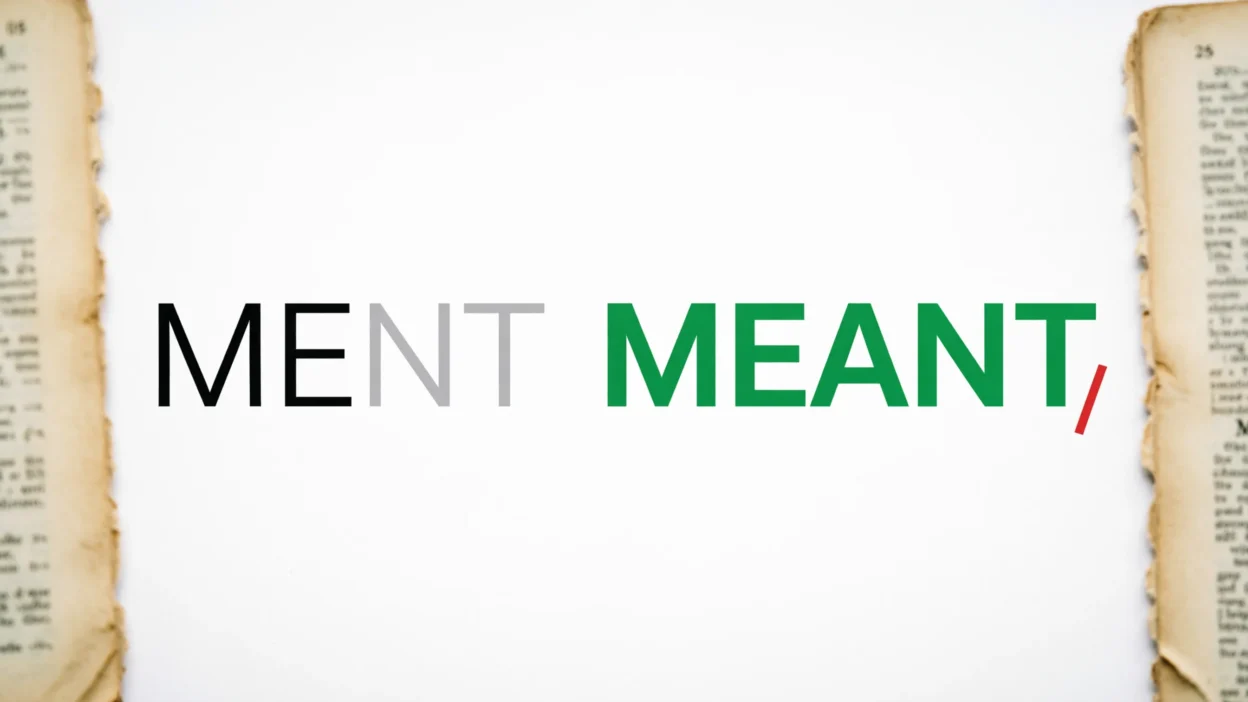
Have you ever typed “ment” when you actually meant “meant”? You’re not alone. This is one of the most common spelling-related questions in English, especially among students, writers, and non-native speakers.
Because the two words look and sound somewhat similar, many people wonder whether ment is a real word or simply a misspelling.
Understanding the difference between ment or meant can instantly improve your writing accuracy and confidence. In this guide, you’ll learn the correct meaning, usage, examples, common mistakes, and practical tips to remember the right spelling every time.
Quick Answer
“Meant” is the correct word in standard English when referring to the past tense and past participle of mean.
“Ment” is generally considered a misspelling of meant and is not accepted as a standard English word in formal writing.
Correct: I meant to call you yesterday.
Incorrect: I ment to call you yesterday.
What Does “Meant” Mean?
The word meant is the past tense and past participle form of the verb mean.
It is used when referring to:
- What someone intended
- What someone wanted to express
- The significance of something
- A purpose or destiny
Definition of Meant
Meant = Intended, signified, expressed, or was supposed to be.
Examples of Meant
- I meant to send the email earlier.
- She meant no harm by her comment.
- What exactly did you mean when you said that?
- The gift meant a lot to me.
- This seat is meant for guests.
In each sentence, meant refers to intention, significance, or purpose.
Is “Ment” a Real Word?
In standard English dictionaries, ment is not recognized as an independent word for the meaning people usually intend when writing meant.
Most of the time, when someone writes ment, they actually mean meant.
Why Do People Write “Ment”?
Several factors contribute to this mistake:
- Fast typing
- Autocorrect errors
- Pronunciation confusion
- Lack of familiarity with irregular verbs
- Informal online communication
Because meant is pronounced similarly to how many people hear “ment,” the spelling error occurs frequently.
Ment vs Meant: Key Differences
| Feature | Ment | Meant |
|---|---|---|
| Standard English Word | No (usually a misspelling) | Yes |
| Part of Speech | Not commonly recognized | Verb (past tense of mean) |
| Accepted in Formal Writing | No | Yes |
| Found in Major Dictionaries | Generally no | Yes |
| Correct Usage Example | Incorrect | I meant what I said |
The clear winner in almost all writing situations is meant.
How to Use “Meant” Correctly
Understanding common sentence patterns helps you use the word naturally.
Expressing Intention
Use meant when talking about something you intended to do.
Examples:
- I meant to finish the project today.
- We meant to visit last weekend.
- They meant to arrive earlier.
Expressing Meaning
Use meant when explaining what words or actions signify.
Examples:
- What she said meant a lot.
- His smile meant everything to her.
- The symbol meant peace.
Expressing Purpose
Use meant when something has a specific function or purpose.
Examples:
- This tool is meant for gardening.
- The message was meant for you.
- These instructions are meant to help beginners.
Common Mistakes With Ment and Meant
Many English learners and native speakers make similar mistakes.
Mistake #1: Using Ment Instead of Meant
Incorrect:
- I ment to reply sooner.
Correct:
- I meant to reply sooner.
Mistake #2: Assuming Ment Is an Alternative Spelling
Incorrect belief:
- Ment is the British spelling.
Reality:
- Neither American English nor British English uses ment as the standard spelling.
Mistake #3: Confusing Pronunciation With Spelling
English contains many irregular verbs.
Examples:
- Mean → Meant
- Keep → Kept
- Sleep → Slept
- Feel → Felt
Because English spelling often differs from pronunciation, relying solely on sound can lead to mistakes.
American vs British English
Good news: there is no difference between American and British English regarding this word.
American English
- I meant to call you.
British English
- I meant to call you.
Both varieties use meant.
The spelling remains exactly the same across:
- American English
- British English
- Canadian English
- Australian English
- New Zealand English
If you’re choosing between ment or meant, the answer is always meant in standard writing.
Synonyms of Meant
Depending on context, you can replace meant with several similar words.
When Referring to Intention
- Intended
- Planned
- Aimed
- Wanted
Example:
- I intended to help.
- I meant to help.
When Referring to Significance
- Signified
- Represented
- Indicated
- Conveyed
Example:
- The gesture signified respect.
- The gesture meant respect.
When Referring to Purpose
- Designed
- Intended
- Created
- Made
Example:
- The guide was designed for beginners.
- The guide was meant for beginners.
Easy Trick to Remember “Meant”
A simple memory trick can help.
Think of:
Mean → Meant
Just as:
- Keep → Kept
- Sleep → Slept
- Feel → Felt
Notice that many irregular verbs change their endings when moving into the past tense.
Whenever you’re talking about something that already happened, ask yourself:
“Am I using the past tense of mean?”
If yes, the correct spelling is meant.
Examples in Everyday Conversations
Here are practical examples you may encounter.
At Work
- I meant to attach the document.
- She meant to schedule the meeting.
In School
- The teacher meant that the assignment is due tomorrow.
- I meant to study last night.
With Friends
- I meant what I said.
- He meant it as a joke.
Online Messages
- Sorry, I meant to text you earlier.
- That’s not what I meant.
These examples show how frequently meant appears in everyday communication.
Why Correct Spelling Matters
Using the correct spelling improves:
- Professional credibility
- Academic writing quality
- Workplace communication
- Search engine visibility
- Reader trust
Small spelling mistakes like ment instead of meant can distract readers and reduce the overall quality of your writing.
Whether you’re writing emails, blog posts, essays, or social media content, accuracy matters.
Frequently Asked Questions
1. Is ment a correct English word?
In most situations, no. It is usually a misspelling of meant.
2. Which is correct: ment or meant?
Meant is the correct spelling in standard English.
3. What does meant mean?
It is the past tense and past participle of mean, referring to intention, significance, or purpose.
4. Is ment accepted in British English?
No. British English uses meant, just like American English.
5. Why do people spell meant as ment?
The mistake often comes from pronunciation, typing errors, or confusion with irregular verb spellings.
6. Can I use ment in formal writing?
No. Formal writing should always use meant when referring to the past tense of mean.
7. How do I remember the correct spelling?
Think of the verb pattern:
Mean → Meant
This makes it easier to remember the correct form.
8. Is meant an irregular verb form?
Yes. Meant is the irregular past tense and past participle of mean.
Summary
When deciding between ment or meant, the correct choice is almost always meant. It is the accepted past tense and past participle form of mean, used to express intention, significance, or purpose. In contrast, ment is generally a spelling mistake and should be avoided in professional, academic, and everyday writing.
The easiest way to remember the difference is to connect mean with its irregular past form meant. Before submitting any piece of writing, quickly check for this common typo. Using the correct spelling helps your message appear polished, credible, and easy to understand.
Actionable Takeaway
Whenever you write about something you intended, expressed, or signified in the past, use meant—never ment. A quick proofreading check can eliminate this common mistake and instantly improve your English writing.