If you have ever typed “realized” and wondered whether it should actually be “realised,” you are not alone. This is one of the most common spelling differences in English, especially for writers communicating with international audiences.
Both spellings look correct because they are correct — but their usage depends mainly on the type of English you are using.
Understanding the difference between “realized” and “realised” is important for students, bloggers, business professionals, and anyone who wants polished, professional writing.
In this guide, you will learn which spelling to use, the difference between American and British English, grammar rules, examples, common mistakes, and tips to remember the correct version.
Quick Answer
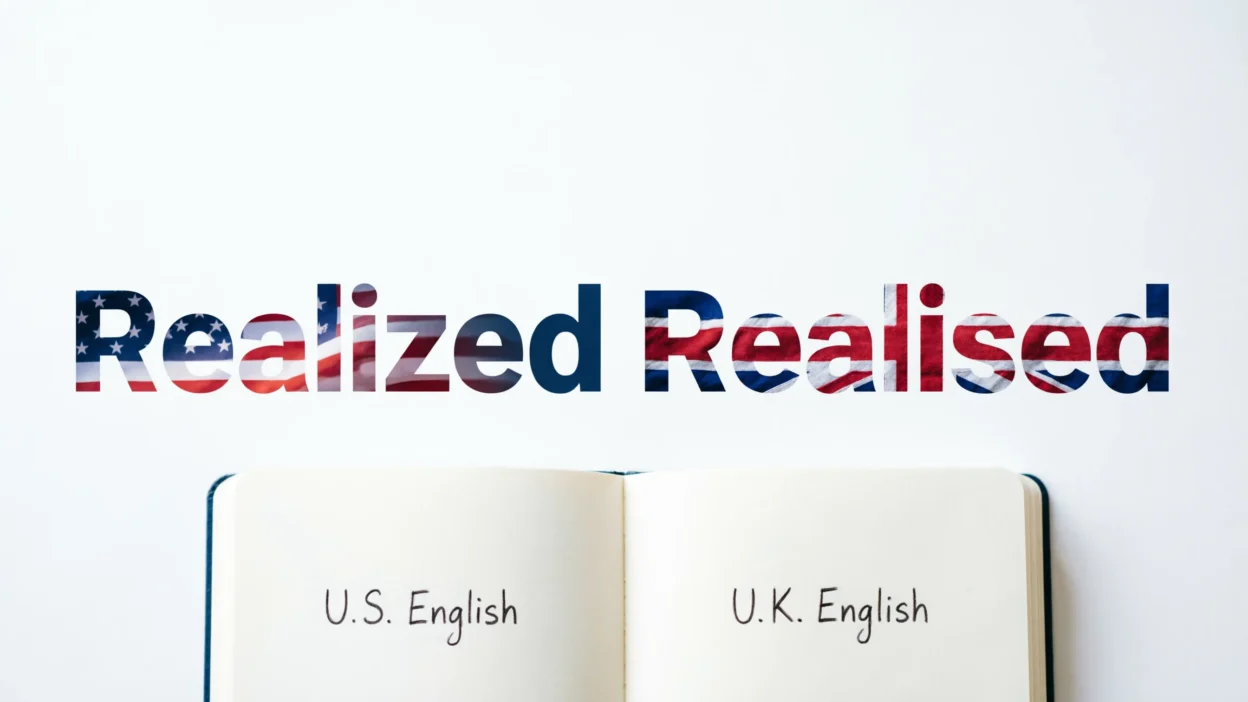
Both realized and realised are correct.
The difference depends on regional English:
- Realized → Preferred in American English
- Realised → Preferred in British English
✅ American English: She realized the mistake quickly.
✅ British English: She realised the mistake quickly.
What Does “Realized” or “Realised” Mean?
The words “realized” and “realised” are the past tense and past participle forms of the verb realize/realise.
They mean:
- To become aware of something
- To understand something clearly
- To achieve or fulfill something
Simple Examples
- He realized he forgot his keys.
- She realised her dream of becoming a doctor.
- I suddenly realized what the teacher meant.
Why Are There Two Spellings?
The difference comes from spelling conventions in American and British English.
American English Preference
American English typically uses -ize endings:
- Realize
- Organize
- Recognize
- Analyze
British English Preference
British English often uses -ise endings:
- Realise
- Organise
- Recognise
- Analyse
\text{Realize} \leftrightarrow \text{Realise}
Both forms have the same meaning and pronunciation.
Realized vs Realised Comparison Table
| Feature | Realized | Realised |
|---|---|---|
| Correct spelling | ✅ Yes | ✅ Yes |
| Used in American English | ✅ Preferred | Rare |
| Used in British English | Accepted but less common | ✅ Preferred |
| Meaning | Same | Same |
| Pronunciation | Same | Same |
| Formal writing acceptance | ✅ Yes | ✅ Yes |
Which Spelling Should You Use?
Use “Realized” If:
- You are writing for an American audience
- Your company follows U.S. English style
- You use American spelling overall
Use “Realised” If:
- You are writing for a British audience
- Your school or organization follows UK English
- Your content uses British spellings consistently
The most important rule is consistency. Do not mix American and British spelling styles in the same piece of writing.
American vs British English Differences
This spelling difference is part of a broader pattern between U.S. and UK English.
American English Examples
| American English | British English |
|---|---|
| Realized | Realised |
| Organized | Organised |
| Recognized | Recognised |
| Analyzed | Analysed |
Important Note
Some British publishers, including Oxford style guides, also accept -ize spellings. So in British English, “realize” and “realized” are not technically wrong. However, “realise” and “realised” are more common in everyday UK usage.
Examples of “Realized” in Sentences
American English Usage
- She realized she had left her phone at home.
- I realized the meeting started earlier than expected.
- They realized their business goal after years of hard work.
Examples of “Realised” in Sentences
British English Usage
- He realised the train had already departed.
- We realised the weather was changing quickly.
- She finally realised her potential.
Common Mistakes People Make
1. Mixing English Styles
❌ The company realised its mistake and organized a meeting.
✅ British English: realised, organised
✅ American English: realized, organized
Stay consistent throughout your writing.
2. Assuming One Version Is Wrong
Both spellings are correct depending on the regional style.
3. Forgetting Audience Expectations
American readers usually expect realized, while British readers often expect realised.
Why Consistency Matters in Writing
Consistent spelling improves:
- Professional appearance
- Reader trust
- SEO clarity
- Academic accuracy
- Brand consistency
If your article uses American English, keep all spellings American:
- Realized
- Color
- Organize
- Center
If using British English:
- Realised
- Colour
- Organise
- Centre
Easy Trick to Remember
Think by Region
- Z in realized → American English
- S in realised → British English
This simple memory trick helps many writers instantly choose the correct spelling.
Related Words with Similar Differences
American vs British Variations
| American | British |
|---|---|
| Organize | Organise |
| Recognize | Recognise |
| Apologize | Apologise |
| Analyze | Analyse |
Synonyms and Related Words
Synonyms for Realized/Realised
- Understood
- Recognized
- Discovered
- Noticed
- Achieved
- Fulfilled
LSI Keywords
- realized or realised
- American vs British spelling
- realize vs realise
- correct English spelling
- grammar differences
- UK vs US English
- spelling variations
- realize meaning
FAQs About Realized or Realised
Is “realized” correct?
Yes. “Realized” is the standard American English spelling.
Is “realised” correct?
Yes. “Realised” is the standard British English spelling.
Which spelling is more common worldwide?
“Realized” appears more often globally due to the influence of American English.
Do both words mean the same thing?
Yes. There is no difference in meaning or pronunciation.
Can British English use “realize”?
Yes. Some British publishers and Oxford style guides accept “-ize” spellings.
Should I use realized or realised in SEO writing?
Choose the version that matches your target audience and stay consistent.
Is one spelling more formal?
No. Both are equally formal within their regional styles.
How do I know which version to use?
Use:
- Realized → American English
- Realised → British English
Final Thoughts on Realized or Realised
The difference between “realized” and “realised” is not about right or wrong — it is about regional spelling preference. American English strongly prefers “realized,” while British English usually favors “realised.” Both forms are grammatically correct, widely understood, and professionally accepted.
The key is consistency. Once you choose either American or British English, keep the same style throughout your writing. This small detail can make your content look more polished, credible, and reader-friendly.
Actionable Takeaway
Use:
- ✅ Realized for American English
- ✅ Realised for British English
Pick one style and stay consistent across your article, email, essay, or website content.