Have you ever typed “sneek” and wondered if it was actually correct? You are not alone. Many English learners and even native speakers confuse sneek and sneak because they sound similar when spoken quickly. However, only one of them is a real English word.
Understanding the difference between sneek and sneak can instantly improve your spelling, writing accuracy, and confidence in English communication.
In this guide, you will learn the correct spelling, meaning, examples, common mistakes, and easy tricks to remember the right word every time.
Quick Answer
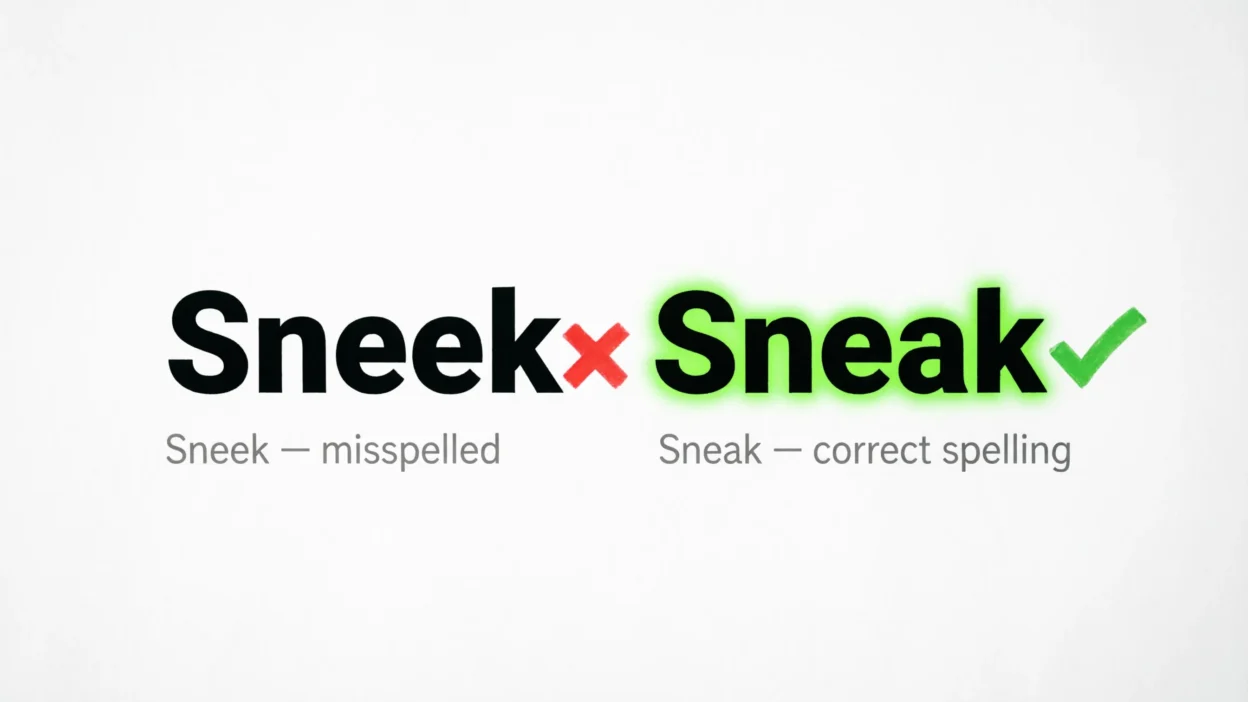
- Sneak is the correct spelling.
- Sneek is incorrect and not recognized as a standard English word.
- “Sneak” means to move quietly or secretly.
Correct Example:
- He tried to sneak out of the house quietly.
Incorrect Example:
- He tried to sneek out of the house quietly.
What Does “Sneak” Mean?
The word sneak is a verb and sometimes a noun. It usually refers to moving in a quiet, secret, or unnoticed way.
Common Meanings of Sneak:
- To move secretly
- To do something without permission
- To hide intentions or actions
- To quietly enter or leave a place
Examples in Sentences
- The child tried to sneak cookies before dinner.
- She snuck into the movie theater.
- The cat likes to sneak around the garden at night.
- He took a sneak peek at the surprise gift.
The word is commonly used in everyday English conversations and writing.
Is “Sneek” a Real Word?
No, sneek is not a correct English word.
It is simply a misspelling of “sneak.” Many people mistakenly write sneek because English spelling patterns can be confusing.
Why People Write “Sneek”
People often assume:
- “ee” makes the long “e” sound
- Words like seek, peek, and week influence the spelling
But English does not follow one universal spelling rule, and sneak keeps the “ea” spelling.
Sneek vs Sneak: Key Difference
| Word | Correct? | Meaning |
|---|---|---|
| Sneak | Yes | Move secretly or quietly |
| Sneek | No | Misspelling of sneak |
The difference is simple:
- Sneak = proper English word
- Sneek = spelling mistake
How to Spell “Sneak” Correctly
The correct spelling is:
Sneak
S + N + E + A + K
A useful memory trick:
- Think of the word “peak”
- Both use “ea”
Another easy trick:
- “Sneak” contains the word “ea” like many common English words:
- Speak
- Break
- Dream
Common Forms of “Sneak”
The word changes form depending on tense and grammar.
| Verb Form | Word |
|---|---|
| Base Verb | Sneak |
| Present Participle | Sneaking |
| Past Tense | Sneaked / Snuck |
| Past Participle | Sneaked / Snuck |
Examples
- She is sneaking into the room.
- He sneaked out early.
- They snuck past security quietly.
Sneaked vs Snuck
This is another common confusion related to “sneak.”
Sneaked
- Traditional past tense
- More formal
- Common in British English
Snuck
- Informal past tense
- Extremely common in American English
- Widely accepted today
Examples
- He sneaked into the office quietly.
- He snuck into the office quietly.
Both are correct in modern English.
Why “Sneek” Looks Correct to Some People
English contains many words with similar sounds but different spellings.
Examples:
| Sound Pattern | Word |
|---|---|
| ee | Seek |
| ee | Week |
| ea | Sneak |
| ea | Speak |
Because pronunciation can be misleading, people often spell words based on sound rather than standard spelling rules.
This is one reason spelling mistakes happen frequently in English.
Common Mistakes People Make
Here are some of the most common errors involving sneak.
1. Writing “Sneek” Instead of “Sneak”
Incorrect:
- I will sneek into the room.
Correct:
- I will sneak into the room.
2. Using Incorrect Past Tense
Incorrect:
- He sneak into the house yesterday.
Correct:
- He sneaked into the house yesterday.
- He snuck into the house yesterday.
3. Confusing Pronunciation with Spelling
Just because a word sounds like it should contain “ee” does not mean it actually does.
English spelling often depends on historical language patterns.
American vs British English Usage
Unlike some English words, “sneak” itself has the same spelling in both American and British English.
However, the past tense usage differs slightly.
| Form | American English | British English |
|---|---|---|
| Sneaked | Correct | Correct |
| Snuck | Very common | Less common but accepted |
British English still tends to prefer sneaked, while American English often uses snuck in casual speech and writing.
Popular Expressions Using “Sneak”
The word appears in many common English phrases.
Sneak Peek
A quick preview of something before official release.
Example:
- We got a sneak peek of the new movie.
Sneak In
To enter secretly.
Example:
- They tried to sneak in without tickets.
Sneak Out
To leave quietly without permission.
Example:
- The teenagers snuck out at midnight.
Sneak Around
To behave secretly or suspiciously.
Example:
- Stop sneaking around behind my back.
Tips to Remember the Correct Spelling
Here are simple ways to avoid writing sneek.
Remember This Phrase:
“Sneak uses EA, not EE.”
Use Word Association
Connect sneak with:
- Speak
- Break
- Dream
Read More English Content
Seeing correct spellings repeatedly helps your brain memorize them naturally.
Frequently Asked Questions
Is sneek a word?
No, sneek is not a recognized English word.
What is the correct spelling: sneek or sneak?
The correct spelling is sneak.
Why do people misspell sneak as sneek?
People often spell it based on pronunciation and confusion with words like seek or peek.
Is snuck a real word?
Yes, snuck is an accepted past tense of sneak, especially in American English.
Which is better: sneaked or snuck?
Both are correct. Sneaked is more formal, while snuck is more conversational.
Is sneak used as a noun too?
Yes. Example:
- He is such a sneak.
How do you pronounce sneak?
It is pronounced:
- /sniːk/
Can I use sneak in formal writing?
Yes. “Sneak” is completely acceptable in formal and informal English depending on context.
Final Thoughts on Sneek or Sneak
The confusion between sneek and sneak is very common, but the answer is simple. Sneak is the only correct spelling, while sneek is just a misspelling caused by pronunciation confusion and English spelling patterns.
Learning the correct spelling helps improve your writing clarity, professionalism, and grammar accuracy. Whether you are writing emails, essays, blog posts, or social media captions, using the correct word makes your communication stronger and more polished.
As a practical takeaway, remember that English spelling does not always match pronunciation perfectly. When in doubt, double-check unfamiliar words with a dictionary or grammar tool. Small spelling corrections like this can greatly improve your confidence in English writing.