If you have ever paused while writing “glueing” or “gluing,” you are not alone. Many English learners, students, writers, and even native speakers get confused about which spelling is correct.
Since English spelling rules can sometimes feel inconsistent, this question comes up often in schools, workplaces, and online searches.
The good news is that the answer is simple once you understand the spelling pattern behind the word.
In this guide, you will learn the correct spelling, why one version is preferred, examples in sentences, common mistakes to avoid, and how American and British English handle the word. By the end, you will confidently know when to use “gluing” and why “glueing” is rarely accepted.
Quick Answer
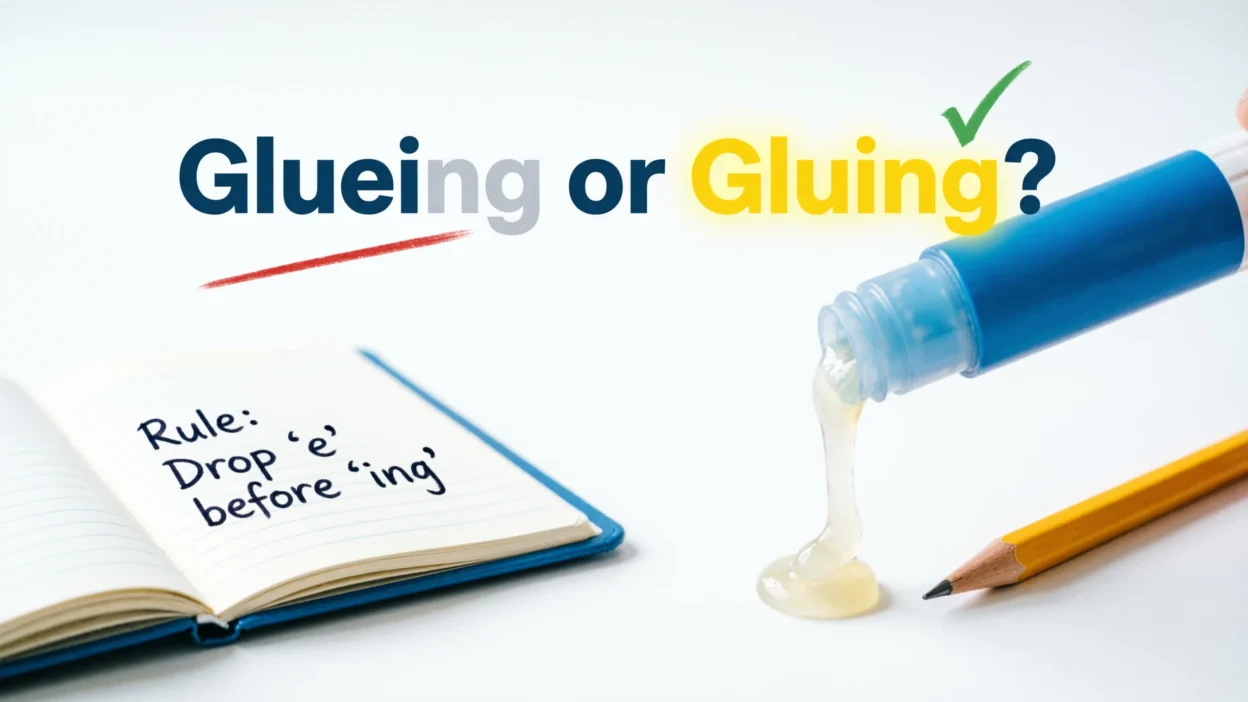
The correct and widely accepted spelling is gluing.
“Glueing” is considered incorrect in modern standard English, although it may occasionally appear in older texts or informal writing.
✅ Correct: I am gluing the pieces together.
❌ Incorrect: I am glueing the pieces together.
What Does “Gluing” Mean?
“Gluing” is the present participle and gerund form of the verb glue. It refers to the act of attaching or sticking things together using glue or adhesive.
Simple Definition
Gluing means:
- Joining materials together with adhesive
- Fixing objects by sticking them
- Bonding surfaces permanently or temporarily
Examples of Gluing in Sentences
- She is gluing the paper onto the poster board.
- The carpenter spent hours gluing the wooden panels together.
- Kids enjoy gluing craft items during art class.
- He accidentally glued his fingers together while repairing the toy.
Why Is “Gluing” Correct Instead of “Glueing”?
The confusion comes from English spelling rules involving verbs ending in -e.
Normally, when a verb ends in silent e, the e is dropped before adding -ing.
For example:
- Make → Making
- Write → Writing
- Drive → Driving
- Glue → Gluing
So according to the standard rule:
\text{Glue} + \text{-ing} = \text{Gluing}
The extra “e” in “glueing” is unnecessary.
Is “Glueing” Ever Correct?
In modern English, “glueing” is generally viewed as a misspelling. However, you might still notice it in:
- Older publications
- Informal online writing
- Typing mistakes
- Regional or outdated spellings
Most dictionaries, grammar guides, and style manuals recommend using gluing exclusively.
Glueing vs Gluing Comparison Table
| Feature | Gluing | Glueing |
|---|---|---|
| Correct modern spelling | ✅ Yes | ❌ No |
| Accepted in dictionaries | ✅ Yes | Rarely |
| Commonly used in writing | ✅ Very common | ❌ Uncommon |
| Preferred in schools and business | ✅ Yes | ❌ No |
| Grammatically standard | ✅ Yes | ❌ No |
Understanding the English Spelling Rule
English often removes the silent “e” before adding “-ing.”
Examples
| Base Verb | Correct -ing Form |
|---|---|
| Bake | Baking |
| Dance | Dancing |
| Smile | Smiling |
| Glue | Gluing |
This pattern helps keep spelling simpler and pronunciation smoother.
Exceptions to the Rule
Some English words keep the “e” before “-ing” to preserve pronunciation.
Examples:
- Age → Ageing (British English)
- Dye → Dyeing
These exceptions are uncommon, which is why many people mistakenly think “glueing” should also keep the “e.”
American vs British English Differences
When it comes to gluing, both American English and British English use the same preferred spelling.
American English
- Correct spelling: Gluing
British English
- Correct spelling: Gluing
Unlike words such as:
- Color vs Colour
- Organize vs Organise
There is no major regional spelling difference here.
However, British English sometimes preserves extra letters in certain verbs, which may explain why some people assume “glueing” could be acceptable. Still, standard British dictionaries overwhelmingly prefer gluing.
Common Mistakes People Make
1. Adding Extra Letters
❌ Glueing
✅ Gluing
People often keep the “e” because the base word ends with “e.”
2. Confusing It with Similar Words
Words like:
- Dyeing
- Ageing
can create confusion because they keep the “e.”
3. Relying on Pronunciation Alone
Both “gluing” and “glueing” sound nearly identical, so spelling mistakes are easy to make.
Examples of “Gluing” in Everyday Situations
At School
- Students were gluing photos into their scrapbooks.
In DIY Projects
- He spent the afternoon gluing broken ceramic pieces together.
In Construction
- Workers are gluing floor tiles carefully.
In Arts and Crafts
- Children love cutting and gluing colorful paper shapes.
Synonyms and Related Words
Using related terms can improve your vocabulary and writing quality.
Synonyms for Gluing
- Sticking
- Bonding
- Attaching
- Joining
- Fastening
- Adhesive bonding
Related LSI Keywords
- glue spelling
- gluing meaning
- glue grammar rule
- glueing vs gluing
- correct spelling of gluing
- English spelling rules
- present participle examples
- verbs ending in e
Why Correct Spelling Matters
Correct spelling improves:
- Professional writing
- Academic work
- SEO content quality
- Reader trust
- Search engine rankings
Misspellings like “glueing” may distract readers or appear less polished, especially in formal writing.
Tips to Remember the Correct Spelling
Drop the Silent “E”
Think of:
- Make → Making
- Bake → Baking
- Glue → Gluing
Practice with Sentences
Writing the word repeatedly helps reinforce memory.
Use Grammar Tools
Spell-checkers and grammar apps can quickly catch mistakes.
FAQs About Glueing or Gluing
Is “glueing” a real word?
“Glueing” may appear occasionally, but it is not considered the standard modern spelling.
What is the correct spelling: glueing or gluing?
The correct spelling is gluing.
Why is the “e” removed in gluing?
English grammar rules usually drop the silent “e” before adding “-ing.”
Is gluing used in both American and British English?
Yes. Both American and British English prefer gluing.
Can I use “glueing” in formal writing?
No. Formal writing should use gluing.
Why do some people write “glueing”?
People often apply inconsistent spelling patterns or assume the “e” should remain.
Is “gluing” a verb or noun?
It can function as both:
- Verb: She is gluing the paper.
- Noun/Gerund: Gluing requires patience.
Are there similar spelling exceptions in English?
Yes. Words like “dyeing” and “ageing” are exceptions to the standard rule.
Final Thoughts on Glueing or Gluing
The spelling debate between “glueing” and “gluing” becomes much easier once you understand the grammar rule behind it. In modern English, gluing is the correct and accepted spelling because the silent “e” from “glue” is dropped before adding “-ing.” Although “glueing” may occasionally appear online or in older texts, it is generally considered incorrect today.
Whether you are writing an email, school assignment, blog post, or social media caption, choosing the correct spelling improves clarity and professionalism. English spelling can be tricky, but small grammar rules like this become easier with practice and repetition.
Actionable Takeaway
Whenever you add “-ing” to a verb ending in silent “e,” remove the “e” first. So always write:
✅ Gluing
❌ Glueing
A quick way to remember it is:
- Bake → Baking
- Drive → Driving
- Glue → Gluing