Have you ever stopped while writing and wondered whether you should use man or men? This is one of the most common grammar questions in English, especially for learners and writers who want to avoid simple but noticeable mistakes.
The confusion usually happens because both words refer to adult males, but they are used in different situations. Understanding when to use man and when to use men will help you write and speak more accurately, whether you’re creating content, studying English, or communicating professionally.
Quick Answer
The difference between man and men is simple:
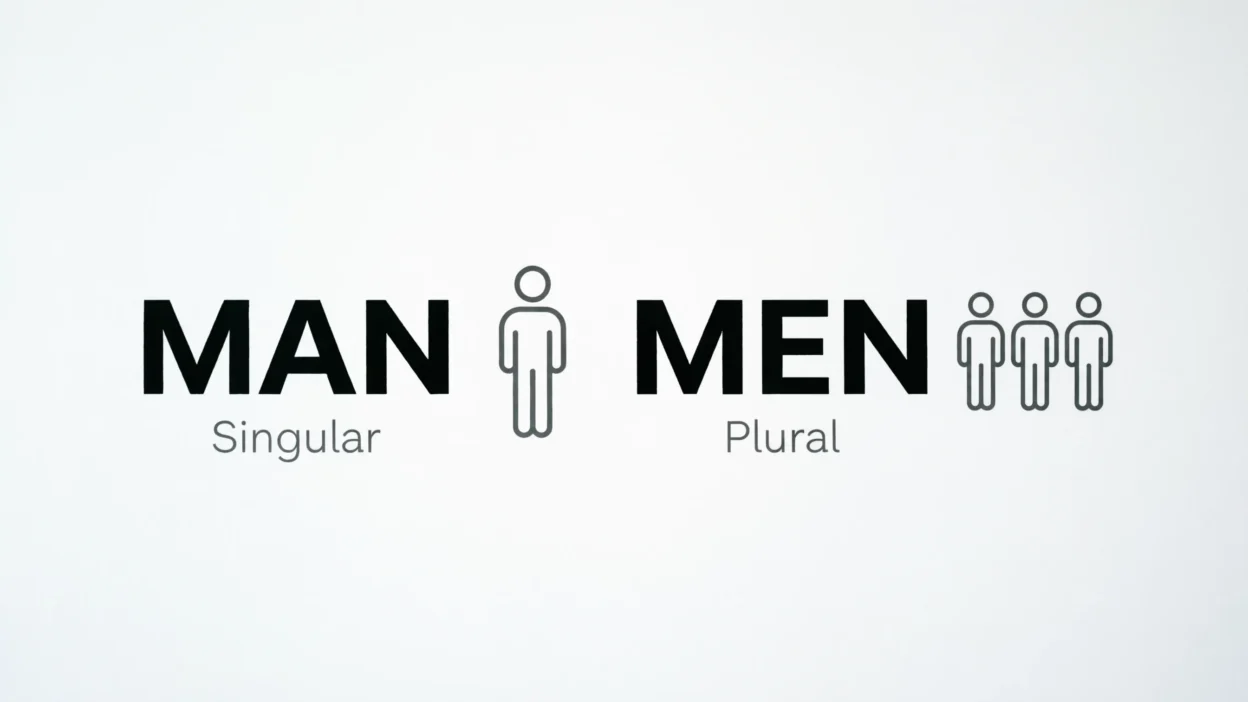
- Man = Singular (one adult male)
- Men = Plural (more than one adult male)
Examples:
- One man is standing outside.
- Three men are standing outside.
Use man when referring to one person and men when referring to two or more people.
What Do Man and Men Mean?
Both man and men refer to adult male human beings.
The difference is the number of people being discussed.
- Man refers to a single adult male.
- Men refers to multiple adult males.
These words are among the most frequently used irregular nouns in English.
Examples
- The man opened the door.
- The men opened the door.
- A man walked into the store.
- Several men walked into the store.
Man or Men Explained
Unlike many English nouns that form plurals by adding -s or -es, the word man changes internally to become men.
Examples of regular nouns:
- Book → Books
- Car → Cars
- Teacher → Teachers
Examples of irregular nouns:
- Man → Men
- Woman → Women
- Foot → Feet
- Tooth → Teeth
Because man is an irregular noun, its plural form must be memorized.
Man vs Men: What’s the Difference?
| Feature | Man | Men |
|---|---|---|
| Meaning | One adult male | More than one adult male |
| Number | Singular | Plural |
| Verb Usage | Singular verb | Plural verb |
| Example | The man is here. | The men are here. |
| Correct Usage | One person | Two or more people |
The key difference is quantity.
If there is only one adult male, use man.
If there are multiple adult males, use men.
When Should You Use Man?
Use man when referring to one adult male.
Examples
- The man works at the bank.
- A man called this morning.
- The man is waiting outside.
- Every man should understand the rules.
Common Sentences
- That man is my neighbor.
- The man drove a blue car.
- One man completed the challenge.
Whenever the noun is singular, choose man.
When Should You Use Men?
Use men when referring to more than one adult male.
Examples
- The men work at the factory.
- Several men attended the meeting.
- The men are waiting outside.
- Many men enjoy outdoor activities.
Common Sentences
- The men discussed the project.
- Two men entered the building.
- The men celebrated their victory.
Whenever there are two or more adult males, use men.
Common Examples of Man and Men
Example 1: At Work
- One man manages the department.
- Several men manage different departments.
Example 2: Sports
- A man scored the winning goal.
- The men celebrated the championship.
Example 3: Travel
- The man boarded the train.
- The men boarded the train.
Example 4: Everyday Life
- The man bought a newspaper.
- The men bought newspapers.
Common Mistakes People Make
Mistake 1: Using Men for One Person
❌ The men is waiting outside.
✅ The man is waiting outside.
Explanation: Only one person is being discussed.
Mistake 2: Using Man for Multiple People
❌ Three man entered the room.
✅ Three men entered the room.
Explanation: More than one person requires the plural form.
Mistake 3: Incorrect Verb Agreement
❌ The men is working today.
✅ The men are working today.
Explanation: Plural nouns require plural verbs.
Mistake 4: Confusing Man with Humanity
❌ Every men should follow the rules.
✅ Every man should follow the rules.
Explanation: “Every” requires a singular noun.
British English vs American English
Unlike many English words, man and men have the same spelling and usage in both British and American English.
| British English | American English |
|---|---|
| Man | Man |
| Men | Men |
| The man is here. | The man is here. |
| The men are here. | The men are here. |
There is no regional spelling difference.
Tips to Remember Man or Men
Here are some simple tricks:
Remember the Numbers
- Man = One person
- Men = More than one person
Check the Verb
If the sentence uses:
- is → usually man
- are → usually men
Examples:
- The man is speaking.
- The men are speaking.
Think About Quantity
Ask yourself:
“Am I talking about one male or several males?”
The answer will immediately tell you which word to use.
Why Is Knowing the Difference Important?
Using the correct form improves:
- Grammar accuracy
- Professional writing
- Academic performance
- Communication skills
- SEO content quality
A simple mistake between man and men can make a sentence sound unnatural or grammatically incorrect.
Whether you’re writing emails, blog posts, essays, or social media content, using the correct form helps readers understand your message instantly.
Man and Men in Common Expressions
English contains many phrases using these words.
Expressions with Man
- Man of the year
- Businessman
- One-man show
- synthetic
- Man of honor
Expressions with Men
- Men at work
- Men in uniform
- Wise men
- Working men
- people of all genders
Understanding the singular and plural forms helps you use these expressions correctly.
Frequently Asked Questions
1. What is the difference between man and men?
Man is singular, while men is plural.
2. Is men the plural of man?
Yes. Men is the irregular plural form of man.
3. Can I say two man?
No.
Correct: Two men
Incorrect: Two man
4. Is man singular or plural?
Man is singular.
5. Is men singular or plural?
Men is plural.
6. Why doesn’t man become mans?
English contains irregular nouns that change form instead of adding -s. Man → Men is one of those irregular patterns.
7. Are man and men used differently in British English?
No. Both British and American English use them the same way.
8. How can I easily remember the difference?
Remember:
- One = Man
- More than one = Men
This simple rule works every time.
Summary
The difference between man and men comes down to singular and plural usage. Man refers to one adult male, while men refers to two or more adult males. Since man is an irregular noun, its plural form changes completely rather than simply adding an -s. Learning this pattern is essential for correct English grammar.
Using the right word improves clarity, professionalism, and confidence in both writing and speaking. Whenever you’re unsure, ask yourself how many people you’re describing. If it’s one person, use man. If it’s more than one, use men. Following this simple rule will help you avoid one of the most common English grammar mistakes.
Actionable Takeaway
Before using man or men, count how many people you’re talking about. Use man for one adult male and men for two or more adult males. This quick check will keep your grammar accurate every time.