Have you ever seen the words caramel and carmel and wondered whether they mean the same thing? You’re not alone. Many English speakers use these terms interchangeably, especially when talking about the sweet, golden-colored confection found in candies, desserts, and coffee drinks.
The confusion around caramel or carmel often comes from pronunciation differences rather than actual spelling rules. In this guide, you’ll learn the meaning of each term, when to use them, common mistakes to avoid, pronunciation differences, and helpful examples so you can use the correct form with confidence.
Quick Answer
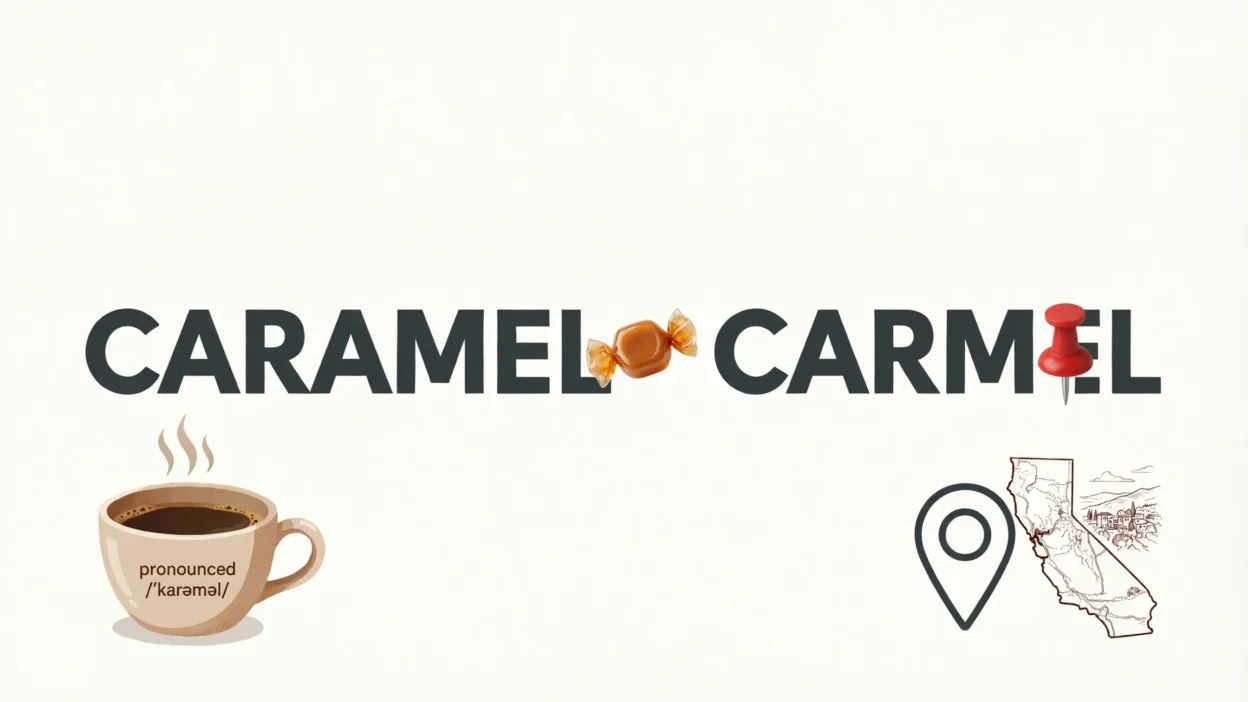
Caramel is the standard and correct English spelling for the sweet confection made from heated sugar.
Carmel is usually a proper noun referring to a place, name, or location, such as Carmel, California, or Mount Carmel. However, some people pronounce caramel as “carmel” in everyday speech.
Examples:
- I ordered a caramel latte.
- We visited Carmel during our vacation.
- She loves caramel candy.
- Carmel is a popular city in Indiana.
What Does “Caramel” Mean?
Caramel is a noun that refers to a sweet substance created by heating sugar until it turns brown. It is widely used in desserts, candies, sauces, coffee drinks, and baked goods.
Definition of Caramel
Caramel means:
- Burnt or cooked sugar used as flavoring
- A chewy candy made from sugar, butter, and cream
- A golden-brown color associated with caramelized sugar
Examples of Caramel
- The ice cream was topped with caramel sauce.
- She bought a bag of caramel candies.
- I prefer a caramel macchiato over plain coffee.
- The cake had rich caramel frosting.
- The apples were coated in warm caramel.
Synonyms and Related Terms
- Toffee
- Butterscotch
- Caramelized sugar
- Sweet sauce
- Confection
Caramel in Everyday English
You’ll commonly hear caramel in discussions about:
- Desserts
- Candy
- Coffee beverages
- Baking recipes
- Food flavorings
Example:
“The bakery sells delicious salted caramel cookies.”
What Does “Carmel” Mean?
Carmel is typically a proper noun rather than a common noun. It is often used as a place name, personal name, or religious reference.
Definition of Carmel
Carmel may refer to:
- A city or town name
- A personal name
- Mount Carmel, a famous historical and religious location
- Geographic locations around the world
Examples of Carmel
- We spent the weekend in Carmel.
- She lives in Carmel, Indiana.
- The tour included a visit to Mount Carmel.
- Carmel is known for its beautiful coastal scenery.
- My friend’s middle name is Carmel.
Important Note
Many people pronounce caramel as “carmel,” especially in certain American regional accents. However, that pronunciation does not change the standard spelling.
Caramel vs Carmel: Key Differences
Although they sound similar in some accents, they usually serve different purposes in writing.
| Feature | Caramel | Carmel |
|---|---|---|
| Part of Speech | Common noun | Proper noun |
| Meaning | Sweet confection made from sugar | Place name, personal name, or religious reference |
| Used in Food? | Yes | Usually no |
| Standard Dictionary Spelling | Yes | No (for the candy) |
| Example | Caramel sauce | Carmel, Indiana |
Simple Comparison
Caramel:
- I added caramel syrup to my coffee.
Carmel:
- We visited Carmel during our road trip.
In the first sentence, the word refers to food.
In the second sentence, it refers to a place.
Common Mistakes People Make
Mistake #1: Spelling Caramel as Carmel
Incorrect:
- I love carmel popcorn.
Correct:
- I love caramel popcorn.
Why?
The food item is spelled caramel, regardless of pronunciation.
Mistake #2: Assuming Carmel Is a Food Word
Incorrect:
- The recipe calls for melted carmel.
Correct:
- The recipe calls for melted caramel.
Why?
Recipe ingredients use the standard spelling caramel.
Mistake #3: Confusing Pronunciation with Spelling
Many speakers say “carmel” but still write caramel.
Correct:
- Pronunciation may vary.
- Standard spelling remains caramel.
Easy Trick to Remember the Difference
A simple memory trick can help.
Remember Caramel
Think:
Caramel = Candy
Both words start with the letter C, and caramel is the sweet treat you eat.
Examples:
- Caramel candy
- Caramel latte
- Caramel sauce
Remember Carmel
Think:
Carmel = City
Many places and names use Carmel, not desserts.
Examples:
- Carmel, California
- Carmel, Indiana
- Mount Carmel
If it’s food, use caramel.
If it’s a location or name, use Carmel.
American vs British English Differences
The spelling caramel is standard in both American English and British English.
American English
Many Americans pronounce caramel in two common ways:
- CARE-uh-mel
- CAR-mel
Both pronunciations are widely accepted.
British English
British speakers more commonly pronounce all three syllables:
- CARE-uh-mel
Despite pronunciation differences, the spelling remains caramel in both varieties of English.
Examples in Sentences
Caramel Examples
- She ordered a caramel frappé.
- The caramel sauce tasted amazing.
- We baked caramel brownies.
- Salted caramel is a popular flavor.
- He enjoys caramel-filled chocolates.
Carmel Examples
- They moved to Carmel last year.
- Carmel attracts many tourists.
- Mount Carmel holds religious significance.
- She attended school in Carmel.
- The conference took place in Carmel.
When to Use Caramel
Use caramel when talking about:
- Candy
- Dessert toppings
- Coffee flavors
- Baking ingredients
- Caramelized sugar
Examples:
- Caramel cheesecake
- Caramel syrup
- Caramel popcorn
- Caramel candy
When to Use Carmel
Use Carmel when referring to:
- Cities and towns
- Geographic locations
- Personal names
- Historical or religious places
Examples:
- Carmel-by-the-Sea
- Carmel, Indiana
- Mount Carmel
- Carmel River
Why Understanding Caramel or Carmel Matters
Using the correct spelling improves your writing accuracy and professionalism. Since many people pronounce caramel differently, it’s easy to assume the spelling should match the pronunciation. However, standard English spelling follows established dictionary forms, not regional accents.
Understanding commonly confused words helps strengthen communication skills, improves grammar accuracy, and prevents misunderstandings in academic, professional, and everyday writing.
Frequently Asked Questions (FAQs)
1. Is caramel or carmel correct?
Caramel is the correct spelling for the sweet confection made from sugar.
2. Why do people say carmel instead of caramel?
Many regional accents simplify the pronunciation by dropping the middle syllable.
3. Is carmel a real word?
Yes. Carmel is a proper noun commonly used as a place name or personal name.
4. Is caramel spelled differently in America?
No. The standard spelling remains caramel.
5. Can I write carmel in a recipe?
No. Recipes should use caramel.
6. Is Carmel a city?
Yes. Several cities and towns are named Carmel, including locations in California and Indiana.
7. How many syllables does caramel have?
Traditionally, caramel has three syllables: CARE-uh-mel, although some speakers pronounce it with two.
8. Which spelling should I use in formal writing?
Use caramel for food-related contexts and Carmel only when referring to a proper noun.
Summary
The difference between caramel or carmel is primarily a matter of spelling and meaning. Caramel is the standard dictionary spelling for the sweet confection made from heated sugar and is the correct form for recipes, menus, food products, and general writing. Carmel, on the other hand, is usually a proper noun used for places, names, and historical locations.
While many English speakers pronounce caramel as “carmel,” pronunciation does not change the correct spelling. Whenever you’re writing about candy, desserts, coffee drinks, or sweet sauces, choose caramel. Reserve Carmel for cities, personal names, and geographic references.
Actionable Takeaway
Ask yourself one simple question: Am I talking about food or a place? If it’s food, write caramel. If it’s a city, name, or location, write Carmel. Following this rule will help you avoid one of the most common spelling confusions in English.