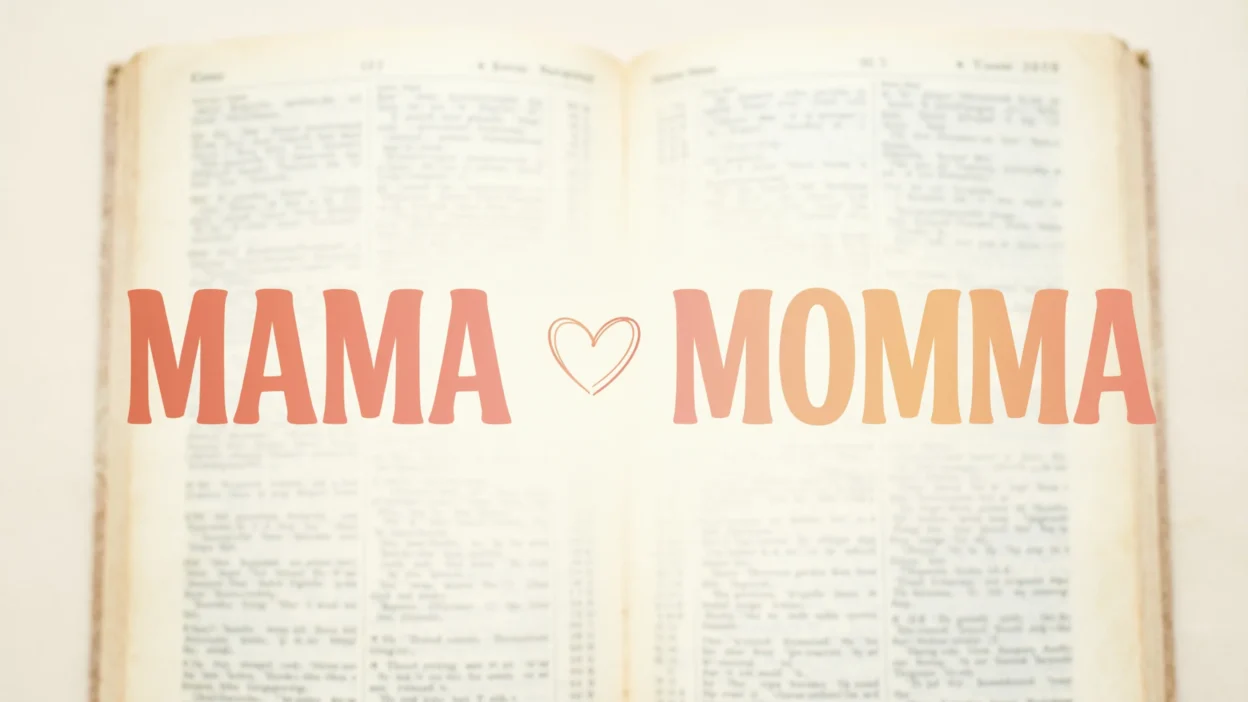
Have you ever wondered whether mama or momma is the correct spelling? These two words often appear in conversations, songs, social media posts, and family settings, leaving many people unsure about which version they should use.
The truth is that both mama and momma are real words, but they are not always used in exactly the same way. Understanding the subtle differences can help you choose the right term for your audience, writing style, and context.
Quick Answer
✅ Mama and momma are both correct.
Mama is the more widely recognized and standard spelling.
Momma is an informal variation commonly used in American English, especially in Southern dialects and affectionate family speech.
Neither word is grammatically wrong, but mama is generally preferred in formal writing.
What Do Mama and Momma Mean?
Both words are affectionate terms used to refer to a mother.
Definition of Mama
Mama (noun): An informal and affectionate word for one’s mother.
Definition of Momma
Momma (noun): A variant spelling of mama, often used in casual speech, regional dialects, and affectionate family settings.
Both terms express warmth, love, and familiarity.
Mama vs Momma: What’s the Difference?
The main difference lies in usage, spelling preference, and regional influence.
| Word | Correct? | Usage |
|---|---|---|
| Mama | ✅ Yes | Standard and widely accepted spelling |
| Momma | ✅ Yes | Informal, regional, and affectionate variation |
In most dictionaries, mama is listed as the primary form, while momma is often considered a variant spelling.
Why Do People Get Confused Between Mama and Momma?
Several factors contribute to the confusion.
1. Similar Pronunciation
Many people pronounce both words almost identically, making it difficult to know which spelling to use when writing.
2. Regional Differences
Certain regions, particularly in the United States, favor momma, while other English-speaking areas tend to use mama.
3. Popular Culture Influence
Songs, movies, television shows, and social media often use both spellings interchangeably, leading people to assume they have different meanings.
4. Family Traditions
Many families develop their own preferred term for a mother, which can influence spelling habits from childhood.
Examples of Mama in Sentences
Everyday Examples
- My mama always knows how to make me feel better.
- The child ran to his mama after falling down.
- She called her mama every weekend.
Professional Examples
- The memoir reflects the author’s close relationship with her mama.
- The article explores how children communicate with their mama during early development.
Creative Examples
- The little girl whispered, “I love you, mama.”
- The song tells the story of a young man missing his mama while traveling.
Examples of Momma in Sentences
Everyday Examples
- My momma makes the best homemade pie.
- The baby reached for his momma.
- She thanked her momma for all the support.
Professional Examples
- The novel captures the wisdom passed down by a Southern momma.
- The character affectionately refers to her mother as momma throughout the story.
Creative Examples
- “Don’t worry, momma is here,” she said softly.
- The country song celebrates the sacrifices of a hardworking momma.
Common Mistakes
Mistake #1: Assuming One Is Wrong
❌ Momma is incorrect.
✅ Both mama and momma are correct.
Mistake #2: Using Momma in Formal Academic Writing
❌ The study examined the relationship between children and their momma.
✅ The study examined the relationship between children and their mother.
Formal writing generally favors mother rather than either informal term.
Mistake #3: Thinking They Have Different Meanings
❌ Mama and momma refer to different family roles.
✅ Both words refer to a mother.
Easy Memory Trick
A simple way to remember the difference is:
Mama = Standard spelling
Momma = Casual, extra-cozy spelling
Think of the extra “m” in momma as adding an extra touch of affection and informality.
American vs British English
The usage of these words varies slightly across English-speaking regions.
| American English | British English |
|---|---|
| Mama ✅ | Mama ✅ |
| Momma ✅ Common | Momma ⚠ Less common |
| Mom ✅ Very common | Mum ✅ Very common |
In the United States, both mama and momma are frequently used.
In the United Kingdom, mum is generally the preferred everyday term, while mama appears less often and momma is relatively uncommon.
Related Words and Forms
Formal Noun
- Mother
Informal Nouns
- Mama
- Momma
- Mom
- Mum
- Mommy
- Mummy
Synonyms
- Mother
- Mom
- Mum
- Mommy
- Parent
- Maternal figure
Related Family Terms
- Father
- Dad
- Daddy
- Papa
- Parent
When Should You Use Mama?
Use mama when:
- Writing generally for a broad audience.
- Using a standard spelling.
- Referring affectionately to a mother.
- Writing stories, poems, or personal content.
- Following dictionary-preferred usage.
When Should You Use Momma?
Use momma when:
- Reflecting regional American speech.
- Writing dialogue for realistic characters.
- Creating a warm, family-oriented tone.
- Quoting someone who uses the term naturally.
- Writing country, Southern, or rural-themed content.
FAQs
1. Is mama or momma correct?
Both are correct. Mama is the standard spelling, while momma is an informal variant.
2. Which spelling is more common?
Mama is generally more widely recognized and accepted across English-speaking regions.
3. Is momma a real word?
Yes. Momma is a legitimate dictionary-recognized variant of mama.
4. Should I use mama or momma in formal writing?
Neither is ideal for formal writing. Use mother instead.
5. Is momma only used in America?
It is most common in the United States, particularly in Southern regions, but it can appear elsewhere.
6. What is the British equivalent of momma?
British English typically uses mum rather than momma.
7. Do mama and momma have different meanings?
No. Both words refer to a mother and carry the same basic meaning.
8. Which spelling should writers choose?
For general audiences, mama is usually the safest choice. Use momma when aiming for a casual, regional, or affectionate tone.
Summary
When comparing mama and momma, it’s important to know that both spellings are correct. They share the same meaning and are used as affectionate ways to refer to a mother. The main distinction lies in style and regional preference rather than grammar or definition.
For most situations, mama serves as the standard and more universally recognized spelling. Meanwhile, momma adds a warm, informal, and often distinctly American flavor to speech and writing. Choosing the right version depends on your audience, tone, and purpose.
Actionable Takeaway
If you’re writing for a broad audience, choose mama. If you’re capturing casual conversation, regional dialect, or a heartfelt family tone, momma can feel more natural and authentic.