Have you ever been writing a report, email, or assignment and stopped to wonder whether the correct spelling is totalling or totaling? You’re not alone. This is one of the most common spelling questions in English, especially because both versions are considered correct in different parts of the world.
The good news is that the difference between totalling and totaling isn’t about meaning—it’s about regional spelling conventions. In this guide, you’ll learn when to use each spelling, how American and British English differ, common mistakes to avoid, practical examples, and simple tips for remembering the correct form.
Quick Answer
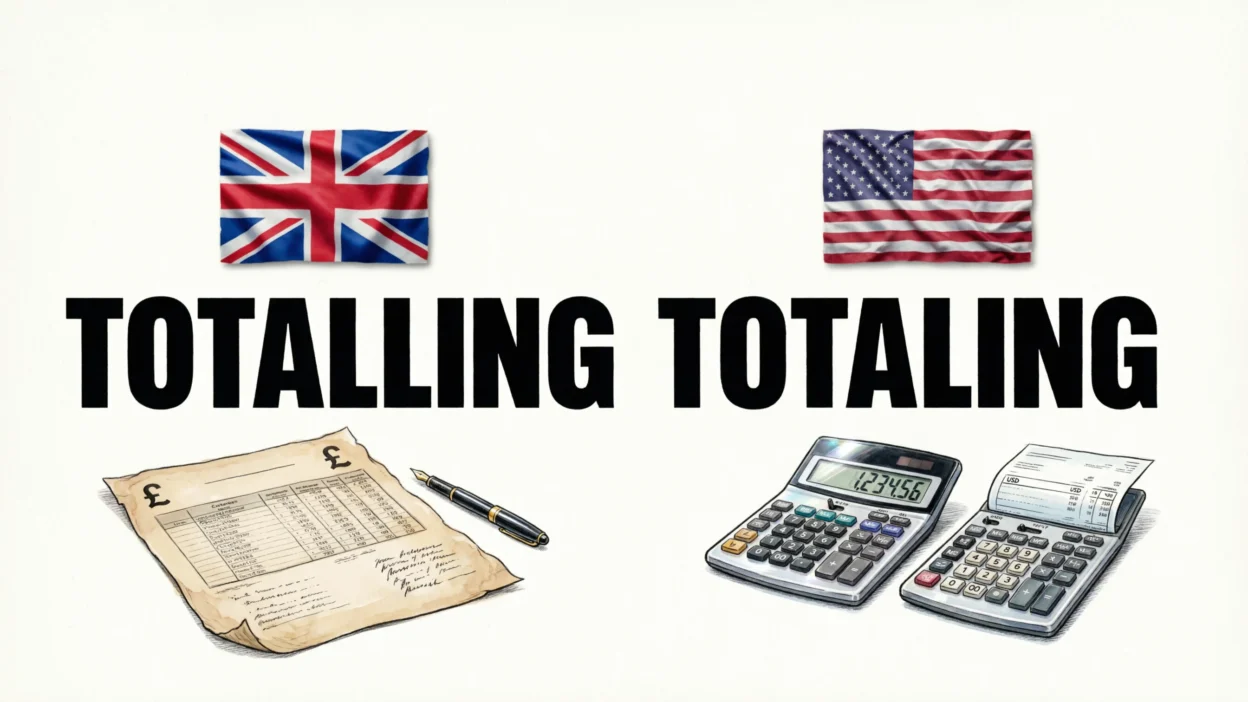
Both totalling and totaling are correct spellings.
- Totalling is the preferred spelling in British English and many other English-speaking countries.
- Totaling is the preferred spelling in American English.
Both words mean adding numbers together to reach a final amount or sum.
Examples:
✅ The expenses are totalling £5,000. (British English)
✅ The expenses are totaling $5,000. (American English)
What Does Totalling Mean?
Totalling is the present participle and gerund form of the verb total in British English.
It refers to calculating a complete amount, sum, or final figure.
Main Meanings of Totalling
- Adding numbers together
- Reaching a final amount
- Calculating a total sum
- Combining values into one figure
Examples of Totalling
- We are totalling the monthly expenses.
- The damages are totalling more than £20,000.
- She spent the afternoon totalling receipts.
- Their purchases are totalling nearly £500.
- The figures are totalling more than expected.
In British English, doubling the final consonant before adding “-ing” follows standard spelling rules.
What Does Totaling Mean?
Totaling has exactly the same meaning as totalling.
The difference is simply that totaling follows American English spelling conventions.
Main Meanings of Totaling
- Adding up figures
- Calculating a final amount
- Reaching a total value
- Combining numbers into one sum
Examples of Totaling
- We are totaling the quarterly sales.
- The repairs are totaling over $10,000.
- She is totaling the budget figures.
- The purchases are totaling nearly $800.
- The losses are totaling millions of dollars.
In American English, many verbs ending in “l” keep a single “l” before adding “-ing.”
Totalling vs Totaling: Key Differences
| Feature | Totalling | Totaling |
|---|---|---|
| Meaning | Adding up to a total | Adding up to a total |
| Grammar | Present participle/gerund | Present participle/gerund |
| British English | Preferred | Less common |
| American English | Less common | Preferred |
| Correctness | Correct | Correct |
| Example | Totalling expenses | Totaling expenses |
The meaning never changes. Only the regional spelling differs.
Why Do People Confuse Totalling and Totaling?
There are several reasons why writers often question these spellings.
Both Are Correct
Unlike many word pairs where one spelling is wrong, both versions are accepted depending on the variety of English you’re using.
Different Regional Rules
British and American English handle words ending in “l” differently when adding suffixes such as “-ing” and “-ed.
Spell Check Variations
Your word processor may flag one spelling depending on the language setting selected.
Exposure to Global Content
Because people regularly read websites from different countries, they’re exposed to both spellings and may wonder which one is correct.
Common Mistakes with Totalling and Totaling
Mistake 1: Mixing Regional Styles
❌ The report uses British spelling everywhere except “totaling.”
✅ Use totalling consistently in British English documents.
Mistake 2: Assuming One Is Wrong
❌ Totaling is incorrect.
✅ Totaling is correct in American English.
Mistake 3: Switching Between Versions
❌ The report is totalling expenses while also totaling revenue.
✅ Choose one style and use it consistently throughout the document.
Consistency matters more than the choice itself.
How to Remember the Difference
A simple memory trick can help.
British English = Double L
Many British English words double the final “l” before adding suffixes.
Examples:
- Travelling
- Cancelling
- Labelling
- Totalling
American English = Single L
American English often keeps a single “l.”
Examples:
- Traveling
- Canceling
- Labeling
- Totaling
If you’re writing for a British audience, use totalling. If you’re writing for an American audience, use totaling.
Examples of Totalling in Everyday Sentences
Here are examples using the British English spelling.
- The invoices are totalling more than £2,000.
- We spent the morning totalling our expenses.
- Their combined costs are totalling £15,000.
- The accountant is totalling last year’s revenue.
- The project expenses are totalling more than expected.
These examples are common in the UK, Australia, New Zealand, and other countries following British spelling conventions.
Examples of Totaling in Everyday Sentences
Here are examples using the American English spelling.
- The invoices are totaling more than $3,000.
- She is totaling the monthly expenses.
- The losses are totaling millions of dollars.
- We are totaling all receipts before filing taxes.
- The damages are totaling a significant amount.
These examples are standard in the United States.
American vs British English
This is where the primary difference appears.
British English
✅ Totalling
✅ Totalled
Examples:
- The expenses are totalling £8,000.
- The costs totalled £12,000.
American English
✅ Totaling
✅ Totaled
Examples:
- The expenses are totaling $8,000.
- The costs totaled $12,000.
The meaning remains identical regardless of the spelling.
Related Words and Synonyms
Synonyms for Totaling/Totalling
- Adding up
- Summing
- Calculating
- Combining
- Counting
- Computing
- Aggregating
- Accumulating
Related Phrases
- Totaling expenses
- Totalling costs
- Totaling revenue
- Totalling figures
- Grand total
- Total amount
- Running total
- Combined total
Using these related terms can improve writing variety and readability.
When Should You Use Totalling?
Use totalling when:
- Writing in British English
- Creating content for UK audiences
- Following British style guides
- Writing for audiences in countries that prefer British spelling
Examples
- Totalling receipts
- Totalling expenses
- Totalling annual costs
- Totalling sales figures
When Should You Use Totaling?
Use totaling when:
- Writing in American English
- Creating content for U.S. audiences
- Following American style guides
- Writing for U.S.-based businesses or publications
Examples
- Totaling expenses
- Totaling revenue
- Totaling invoices
- Totaling monthly sales
Frequently Asked Questions
Is totalling a real word?
Yes. Totalling is the standard British English spelling of the present participle of “total.”
Is totaling a real word?
Yes. Totaling is the standard American English spelling.
Which spelling is correct, totalling or totaling?
Both are correct. The appropriate choice depends on whether you’re using British or American English.
Why does British English use double “l”?
British spelling conventions typically double the final “l” before adding suffixes such as “-ing” and “-ed.”
Why does American English use a single “l”?
American spelling often simplifies words by keeping a single “l” before suffixes.
Can I use both spellings in the same document?
It’s best to choose one style and remain consistent throughout the document.
Which spelling is more common worldwide?
Both are widely used, but totaling is common in the United States, while totalling dominates in many other English-speaking countries.
How do I know which version to use?
Consider your audience. Use totaling for American readers and totalling for British readers.
Summary
The difference between totalling and totaling is purely regional. Both spellings mean the same thing: adding numbers together to calculate a final amount or sum. The choice depends on whether you’re following British English or American English conventions.
If you’re writing for a British audience, totalling is the preferred spelling. If you’re writing for an American audience, totaling is the standard choice. Neither spelling is wrong, but consistency is important. Selecting one style and using it throughout your document will make your writing look professional and polished.
Actionable Takeaway
Remember this simple rule: British English doubles the “l” (totalling), while American English keeps a single “l” (totaling). Choose the spelling that matches your audience and stay consistent throughout your writing.