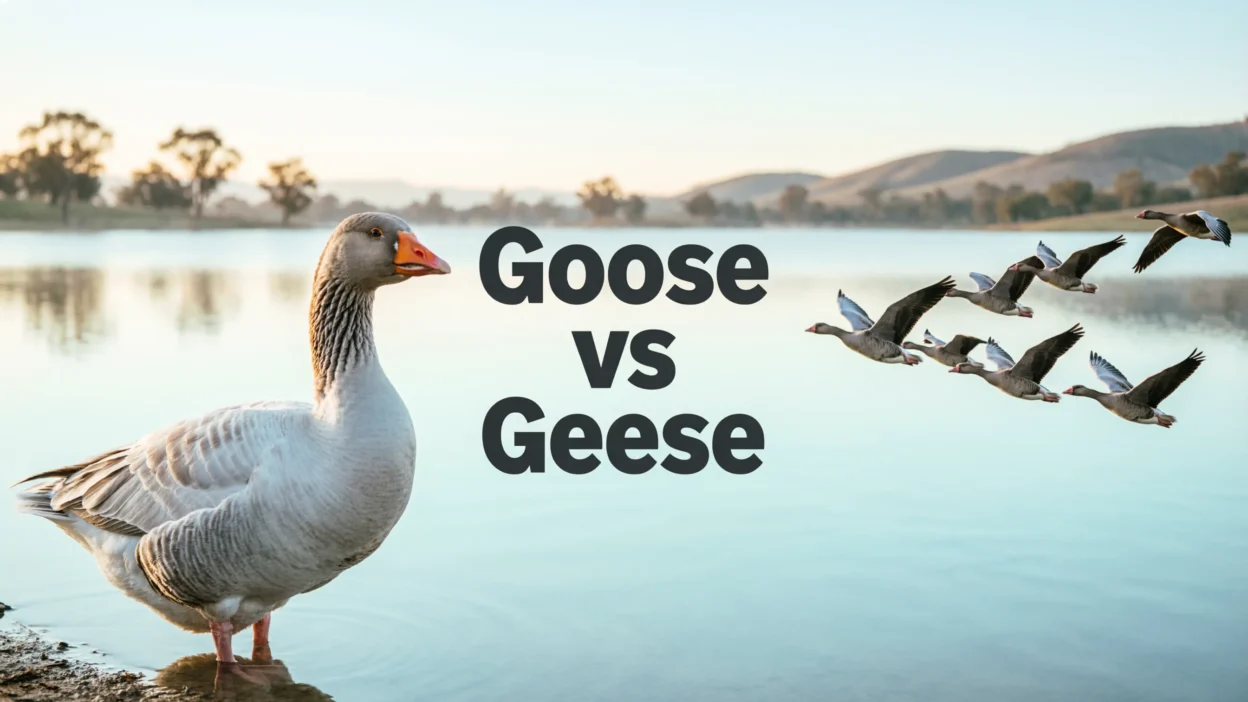
English can feel confusing sometimes, especially when one word suddenly changes completely in its plural form. A common example is “geese” or “goose.”
Many learners and even native speakers occasionally pause before deciding which one is correct. If you have ever wondered whether to say “one geese” or “many goose,” you are not alone.
This guide explains the difference between geese and goose in simple, everyday language. You will learn the meaning of each word, grammar rules, pronunciation tips, examples, common mistakes, and even American vs British English usage. By the end, you will feel confident using both correctly in writing and conversation.
Quick Answer
- Goose = singular form
Example: The goose is swimming in the lake. - Geese = plural form
Example: Several geese are flying south for winter.
The word geese is the irregular plural of goose, just like:
- tooth → teeth
- foot → feet
- mouse → mice
What Does “Goose” Mean?
A goose is a type of large water bird related to ducks and swans. Geese are known for:
- Long necks
- Loud honking sounds
- Seasonal migration
- Living near lakes, rivers, and wetlands
The word “goose” can also appear in idioms and informal expressions.
Examples of “Goose” in Sentences
- The goose walked across the road slowly.
- I saw a white goose near the pond.
- That goose keeps chasing visitors in the park.
- A wild goose landed beside the river.
What Does “Geese” Mean?
Geese refers to more than one goose. It is the plural form and must always be used when talking about multiple birds.
Examples of “Geese” in Sentences
- The geese are flying in a V-formation.
- We fed the geese at the lake yesterday.
- Several geese crossed the field together.
- Canadian geese migrate every year.
Why Is the Plural “Geese” Instead of “Gooses”?
English contains many irregular plurals, which do not simply add “-s” or “-es.”
The word comes from Old English, where vowel changes were common in plural forms. Over time:
- goose → geese
- foot → feet
- tooth → teeth
So, “gooses” is considered grammatically incorrect in standard English.
Goose vs Geese Comparison Table
| Feature | Goose | Geese |
|---|---|---|
| Meaning | One bird | More than one bird |
| Grammar | Singular noun | Plural noun |
| Example | The goose is loud. | The geese are loud. |
| Verb Usage | Uses singular verbs | Uses plural verbs |
| Correct Form | Yes | Yes |
| “Gooses” Correct? | No | No |
How to Remember the Difference
A simple trick is to remember:
- One goose
- Two geese
Think of similar irregular words:
- tooth → teeth
- foot → feet
The vowel changes when the quantity changes.
Common Mistakes People Make
Many English learners accidentally mix up these forms. Here are the most common errors and the correct versions.
Incorrect: “There are many goose in the park.”
✔ Correct: “There are many geese in the park.”
Incorrect: “I saw two gooses.”
✔ Correct: “I saw two geese.”
Incorrect: “The geese is swimming.”
✔ Correct: “The geese are swimming.”
Incorrect: “One geese walked away.”
✔ Correct: “One goose walked away.”
Singular and Plural Rules Explained
Use “Goose” When:
- Talking about one bird
- Using singular verbs like is or was
Examples:
- The goose is hungry.
- A goose was sitting by the lake.
Use “Geese” When:
- Talking about two or more birds
- Using plural verbs like are or were
Examples:
- The geese are noisy today.
- Several geese were flying overhead.
Pronunciation Guide
Correct pronunciation helps avoid confusion.
Goose
Pronounced: /guːs/
Sounds like: “goos”
Geese
Pronounced: /giːs/
Sounds like: “gees”
The vowel sound changes from:
- “oo” in goose
- “ee” in geese
American vs British English Differences
Good news: both American English and British English use:
- goose (singular)
- geese (plural)
There is no spelling difference between the two varieties of English in this case.
However, pronunciation accents may vary slightly:
- American English often sounds flatter and stronger.
- British English may sound softer depending on the regional accent.
Still, the grammar rules remain exactly the same.
Idioms and Expressions Using “Goose”
English speakers often use the word “goose” in expressions and idioms.
Wild Goose Chase
Meaning: A pointless or hopeless search.
Example:
- Looking for that missing file turned into a wild goose chase.
Kill the Goose That Lays the Golden Eggs
Meaning: Destroying something valuable because of greed.
Example:
- Raising prices too high may kill the goose that lays the golden eggs.
Goosebumps
Interestingly, “goose” also appears in the word “goosebumps.”
Example:
- That movie gave me goosebumps.
Are “Goose” and “Geese” Only About Birds?
Mostly yes, but sometimes people use these words metaphorically or humorously.
For example:
- “Silly goose” is a playful phrase for someone acting funny or foolish.
- “Mother Goose” refers to traditional children’s stories and rhymes.
Examples in Everyday Conversation
Here are natural examples you might hear in daily life:
- “Watch out! That goose looks aggressive.”
- “The geese return every winter.”
- “We saw a goose beside the lake.”
- “Those geese are very loud this morning.”
Grammar Tip for Better Writing
Always match the noun with the correct verb.
Singular Agreement
- The goose is eating.
Plural Agreement
- The geese are eating.
This small detail improves grammar accuracy and makes your writing sound natural.
Related Words and LSI Keywords
To better understand the topic, here are related words often connected with geese and goose:
- Waterfowl
- Bird migration
- Canadian geese
- Wild goose
- Lake birds
- Water birds
- Flock of geese
- Goose feathers
- Pond wildlife
- Migratory birds
These terms frequently appear in articles about birds, grammar, and wildlife.
Fun Facts About Geese
Geese Migrate Long Distances
Many geese travel thousands of miles during migration seasons.
They Fly in a V Shape
This formation helps conserve energy during long flights.
Geese Can Recognize People
Studies suggest geese can remember faces and environments.
Some Geese Become Protective
They are known to defend their nests aggressively.
Frequently Asked Questions
Is “gooses” ever correct?
In standard English, no. The correct plural of goose is always geese.
What is the singular form of geese?
The singular form is goose.
Why is goose pluralized as geese?
It follows an old irregular English plural pattern similar to tooth/teeth and foot/feet.
Can I say “a geese”?
No. “Geese” is plural, so you should say:
- “a goose”
- “some geese”
Are geese and ducks the same?
No. They are related water birds, but geese are generally larger with longer necks.
What is a group of geese called?
A group of geese is often called:
- a flock
- a gaggle (on land)
- a skein (in flight)
Do British people use “geese”?
Yes. Both British and American English use “geese” as the plural form.
What does “silly goose” mean?
It is a playful expression used to describe someone acting goofy, funny, or harmlessly foolish.
Final Summary
Understanding the difference between geese and goose is actually quite simple once you know the rule. Use goose when talking about one bird and geese when referring to more than one. Since this is an irregular plural noun, it does not follow the normal “add -s” pattern used in most English words.
Learning irregular plurals improves both your spoken and written English. The next time you see birds near a lake or write about wildlife, you will confidently know whether to use “goose” or “geese.” Small grammar improvements like this make your communication clearer, more natural, and more professional.
Actionable Takeaway
Remember this quick formula:
- 1 = goose
- 2 or more = geese
Practice by writing your own sentences using both words. Repeating them in real conversations will help you remember the difference naturally.