English can be confusing, especially when two words look similar, sound related, and appear in completely different contexts. One common example is “sown” or “sewn.”
Many writers, students, and even native speakers mix them up because both are past participles and come from verbs that sound alike: sow and sew.
If you have ever paused while writing a sentence like “the seeds were ___” or “the dress was ___,” you are not alone. This guide explains the difference between sown vs sewn in simple language, with clear examples, common mistakes, grammar tips, and usage differences. By the end, you will know exactly when to use each word confidently.
Quick Answer
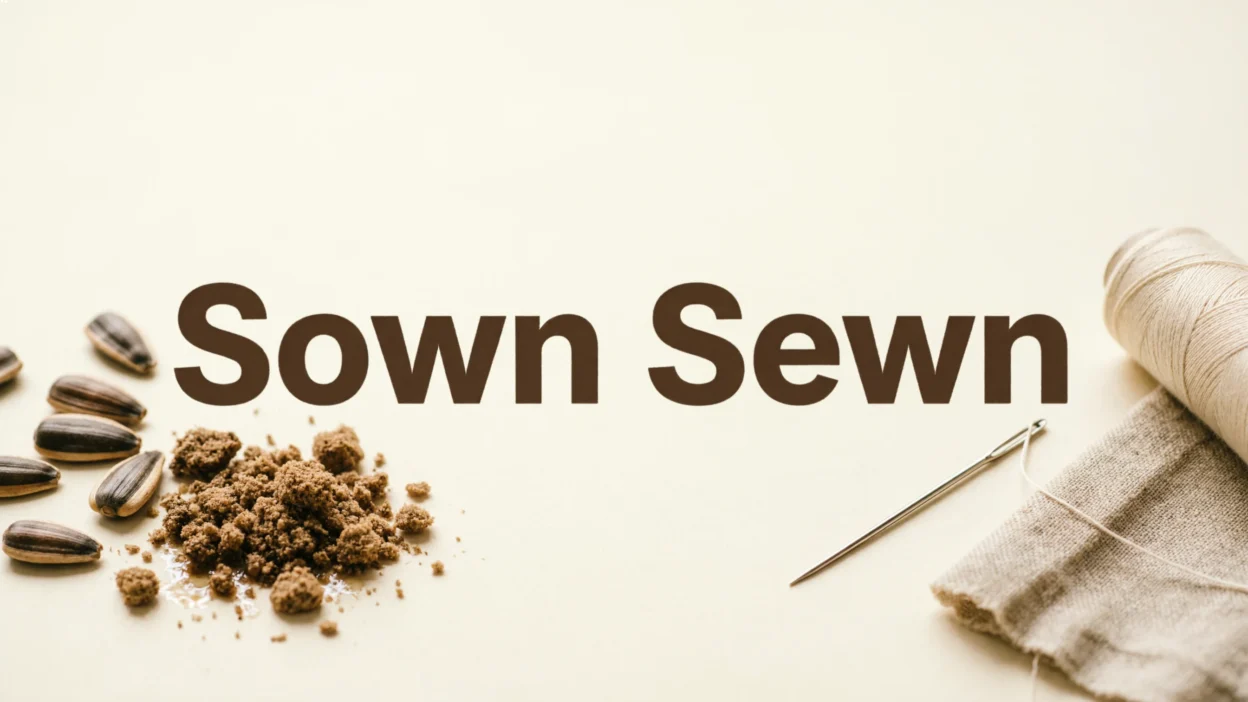
- Sown is the past participle of sow, which means to plant seeds or spread something.
- Sewn is the past participle of sew, which means to stitch fabric or repair clothing with thread.
Simple Examples:
- The farmer had sown wheat across the field.
- The tailor had sewn the jacket perfectly.
The words are not interchangeable because they come from different verbs and have completely different meanings.
What Does “Sown” Mean?
The word sown comes from the verb sow. It is mostly connected to farming, gardening, planting, or spreading ideas and emotions.
Meaning of Sown
“Sown” means:
- Seeds have been planted in the ground
- Something has been spread widely
Examples of Sown
- The fields were sown with rice before the rainy season.
- She had sown flower seeds in the garden.
- His careless comments had sown confusion among the team.
- The farmer has sown corn across the land.
Common Uses of Sown
You will often see “sown” with:
- Seeds
- Crops
- Fields
- Ideas
- Doubt
- Fear
- Division
Related LSI Keywords
- sow meaning
- past participle of sow
- sow vs sown
- planting seeds
- agricultural vocabulary
- spread ideas
What Does “Sewn” Mean?
The word sewn comes from the verb sew, which means joining fabric or material using a needle and thread.
Meaning of Sewn
“Sewn” means:
- Fabric has been stitched together
- Clothing has been repaired or created with thread
Examples of Sewn
- The buttons were carefully sewn onto the shirt.
- She had sewn her own wedding dress.
- The torn pocket was neatly sewn shut.
- The label is sewn inside the jacket.
Common Uses of Sewn
“Sewn” usually appears with:
- Clothes
- Fabric
- Needles
- Thread
- Dresses
- Patches
- Curtains
Related LSI Keywords
- sew meaning
- past participle of sew
- sewing vocabulary
- stitched fabric
- hand-sewn clothes
- sewing examples
Sown or Sewn: Key Difference Explained
Although the words look similar, their meanings are completely unrelated.
| Word | Base Verb | Meaning | Common Context |
|---|---|---|---|
| Sown | Sow | To plant or spread | Farming, ideas, emotions |
| Sewn | Sew | To stitch with thread | Clothing, fabric, tailoring |
Easy Trick to Remember
- Sown = Soil → both relate to planting.
- Sewn = Stitching → both relate to sewing fabric.
This memory trick helps many learners avoid confusion.
Examples of Sown and Sewn in Sentences
Understanding words through context makes learning easier. Here are practical examples.
Sentences Using Sown
- The farmer had already sown the seeds by spring.
- Distrust was sown among the employees.
- They had sown vegetables in neat rows.
- Panic was quickly sown through social media rumors.
Sentences Using Sewn
- Her initials were sewn into the blanket.
- The costume was hand-sewn by a designer.
- He carefully sewn the rip in his backpack.
- Tiny pearls were sewn onto the gown.
Common Mistakes People Make
Many English learners accidentally swap these words because they sound somewhat similar when spoken quickly.
Mistake 1: Using Sewn for Planting
❌ The farmer had sewn the seeds.
✅ The farmer had sown the seeds.
Why? Seeds are planted, not stitched.
Mistake 2: Using Sown for Clothing
❌ The dress was beautifully sown.
✅ The dress was beautifully sewn.
Why? Clothes are stitched with thread.
Mistake 3: Confusing Pronunciation
Some people pronounce both words similarly. However:
- Sown sounds like “sohn.”
- Sewn sounds like “sohn” too in many accents.
Because pronunciation overlaps, context becomes extremely important.
American vs British English Differences
There is no major spelling difference between American English and British English for sown and sewn. Both forms are standard and accepted in both varieties of English.
However, there are slight style differences in usage frequency.
American English
American writers often use:
- “sewed” alongside “sewn”
- “has sewn” in formal writing
Example:
- She has sewn the curtains.
- She sewed the curtains yesterday.
British English
British English tends to favor:
- “sewn” more consistently in formal contexts
Example:
- The badge was sewn onto the uniform.
For “sown,” both American and British English use the same form without significant variation.
Grammar Rules for Sown and Sewn
Both words are past participles.
Verb Forms of Sow
| Tense | Form |
|---|---|
| Base Verb | Sow |
| Past Tense | Sowed |
| Past Participle | Sown |
Examples:
- He sowed seeds yesterday.
- He has sown seeds this season.
Verb Forms of Sew
| Tense | Form |
|---|---|
| Base Verb | Sew |
| Past Tense | Sewed |
| Past Participle | Sewn |
Examples:
- She sewed the dress yesterday.
- She has sewn the dress already.
Why People Confuse Sown and Sewn
There are several reasons:
- Similar pronunciation
- Nearly identical spelling
- Both are irregular-looking verbs
- English learners often memorize visually
Another reason is autocorrect tools sometimes fail to catch the mistake because both are correctly spelled English words.
That is why understanding meaning matters more than memorizing spelling alone.
Real-Life Usage Examples
In Gardening
- The tomato seeds were sown in early March.
- Fresh herbs are usually sown during spring.
In Fashion and Tailoring
- The logo was sewn onto the cap.
- Handmade dresses are carefully sewn by artisans.
In Figurative Language
“Sown” is often used metaphorically:
- The speech had sown hope among citizens.
- Their actions sown distrust within the group.
“Sewn” is rarely used metaphorically, though phrases like “sewn together” can symbolize unity.
How to Remember the Difference Forever
Here are simple memory associations:
Remember “Sown”
Think:
- Soil
- Seeds
- Farming
All connect with planting.
Remember “Sewn”
Think:
- Stitching
- Shirts
- Sewing machines
All connect with fabric and thread.
A quick mental image can help:
- Farmers sow
- Tailors sew
FAQs About Sown or Sewn
Is it “sown” or “sewn” seeds?
The correct phrase is sown seeds because seeds are planted, not stitched.
Can “sewn” ever mean planted?
No. “Sewn” only relates to stitching fabric or materials.
Is “sowed” correct instead of “sown”?
Yes. “Sowed” is the simple past tense, while “sown” is the past participle.
Example:
- He sowed seeds yesterday.
- He has sown seeds already.
Is “sewed” the same as “sewn”?
Not exactly. “Sewed” is the simple past tense, while “sewn” is the past participle.
Why do sown and sewn sound similar?
English pronunciation evolved over centuries, and some unrelated words developed similar sounds despite different meanings.
Which word is more common?
That depends on context:
- “Sown” is common in agriculture and figurative writing.
- “Sewn” is common in tailoring, fashion, and crafts.
Are both words grammatically correct?
Yes. Both are correct words with different meanings and uses.
Can I use sewn in creative writing?
Absolutely. “Sewn” is often used in descriptive storytelling involving clothes, costumes, or handmade objects.
Final Thoughts on Sown or Sewn
Understanding the difference between sown and sewn becomes much easier once you connect each word to its context. If the sentence relates to planting seeds, spreading ideas, or agriculture, the correct word is sown. If the sentence involves stitching fabric, repairing clothes, or tailoring, then sewn is the right choice.
These two words may look alike, but they belong to completely different actions and meanings. Learning the distinction improves your grammar, writing clarity, and confidence in English communication. Whether you are writing an essay, blog post, social media caption, or professional document, choosing the correct word helps your message sound polished and accurate.
Actionable Takeaway
Before using sown or sewn, ask yourself one simple question:
- Am I talking about planting or stitching?
If it is about seeds or spreading ideas, use sown. If it is about thread, fabric, or clothing, use sewn. This quick habit will help you avoid mistakes instantly.