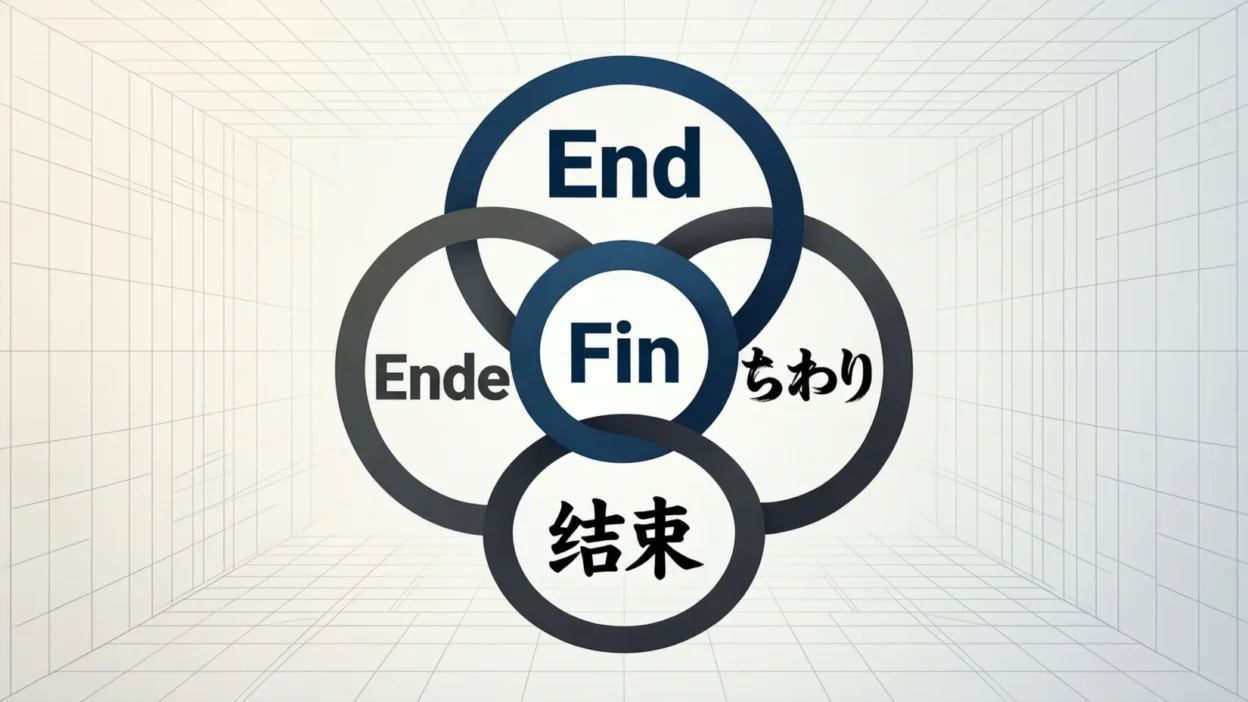
Every story, movie, book, or presentation eventually reaches the end. Knowing the end in different languages is useful for language learners, writers, translators, students, and anyone curious about global cultures.
From novels to films and daily conversations, this phrase carries a clear and universal meaning.
This article is designed to match informational search intent and help you understand how to say the end in different languages, with accurate translations, simple pronunciations, and real-life examples.
If you’re looking for the end in all languages, the end translations, or how people say the end around the world, you’re in the right place.
The End in Different Languages (70 Languages Table)
| Language | The End (Native + Pronunciation) | Example Sentence + English Meaning |
|---|---|---|
| English | The End (the end) | This movie ends with “The End.” → The story is finished |
| Spanish | El fin (el feen) | El fin de la historia. → The end of the story |
| French | La fin (la fan) | La fin du film. → The end of the movie |
| German | Das Ende (das en-duh) | Das Ende des Buches. → The end of the book |
| Italian | La fine (la fee-neh) | La fine del racconto. → The end of the tale |
| Portuguese | O fim (oo feen) | O fim do filme. → The end of the movie |
| Dutch | Het einde (het ayn-duh) | Het einde van het verhaal. → The end of the story |
| Russian | Конец (ka-nyets) | Это конец фильма. → This is the end of the movie |
| Ukrainian | Кінець (kee-nets) | Кінець історії. → The end of the story |
| Polish | Koniec (ko-nyets) | To koniec książki. → This is the end of the book |
| Czech | Konec (ko-nets) | Konec příběhu. → End of the story |
| Slovak | Koniec (ko-nets) | Koniec filmu. → End of the movie |
| Hungarian | Vége (veh-geh) | A történet vége. → The story is over |
| Romanian | Sfârșit (sfur-shit) | Sfârșit de drum. → End of the road |
| Greek | Το τέλος (to te-los) | Το τέλος της ταινίας. → The end of the film |
| Turkish | Son (son) | Hikâyenin sonu. → The end of the story |
| Arabic | النهاية (an-ni-ha-ya) | هذه نهاية القصة. → This is the end of the story |
| Hebrew | הסוף (ha-sof) | זה הסוף. → This is the end |
| Persian | پایان (pa-yaan) | پایان فیلم. → End of the movie |
| Urdu | اختتام (ikh-ti-taam) | کہانی کا اختتام۔ → The end of the story |
| Hindi | अंत (ant) | कहानी का अंत। → End of the story |
| Bengali | শেষ (shesh) | গল্পের শেষ। → End of the story |
| Punjabi | ਅੰਤ (ant) | ਕਹਾਣੀ ਦਾ ਅੰਤ। → End of the story |
| Tamil | முடிவு (mu-di-vu) | கதையின் முடிவு. → The end of the story |
| Telugu | ముగింపు (mu-guim-pu) | కథ ముగింపు. → Story ending |
| Marathi | शेवट (she-vat) | चित्रपटाचा शेवट. → End of the movie |
| Gujarati | અંત (ant) | વાર્તાનો અંત. → End of the story |
| Kannada | ಅಂತ್ಯ (an-tya) | ಕಥೆಯ ಅಂತ್ಯ. → End of the story |
| Malayalam | അവസാനം (a-va-saa-nam) | കഥയുടെ അവസാനം. → End of the story |
| Sinhala | අවසානය (a-va-saa-na-ya) | කතාවේ අවසානය. → End of the story |
| Nepali | अन्त्य (an-tya) | कथाको अन्त्य। → End of the story |
| Thai | ตอนจบ (ton jop) | นี่คือตอนจบ → This is the end |
| Vietnamese | Kết thúc (ket thuk) | Câu chuyện kết thúc. → The story ends |
| Indonesian | Akhir (a-khir) | Akhir cerita. → End of the story |
| Malay | Pengakhiran (pe-nga-khi-ran) | Pengakhiran filem. → End of the movie |
| Filipino | Wakas (wa-kas) | Wakas ng kwento. → End of the story |
| Japanese | 終わり (o-wa-ri) | 物語の終わり。 → The end of the story |
| Korean | 끝 (kkeut) | 영화의 끝. → End of the movie |
| Chinese (Mandarin) | 结束 (jie-shu) | 故事结束了。 → The story has ended |
| Cantonese | 結束 (git chuk) | 故事結束。 → The story ends |
| Mongolian | Төгсгөл (tog-sgol) | Киноны төгсгөл. → End of the movie |
| Kazakh | Соңы (so-ny) | Әңгіменің соңы. → End of the story |
| Uzbek | Oxiri (o-khi-ri) | Hikoyaning oxiri. → End of the story |
| Azerbaijani | Son (son) | Hekayənin sonu. → End of the story |
| Georgian | დასასრული (da-sa-sru-li) | წიგნის დასასრული. → End of the book |
| Armenian | Վերջ (verj) | Պատմության վերջը։ → End of the story |
| Swahili | Mwisho (mwee-sho) | Mwisho wa hadithi. → End of the story |
| Zulu | Isiphetho (i-si-pe-tho) | Isiphetho sendaba. → End of the story |
| Afrikaans | Die einde (dee ayn-duh) | Die einde van die boek. → End of the book |
| Yoruba | Ipari (ee-pa-ree) | Ipari itan. → End of the story |
| Igbo | Ọgwụgwụ (og-woo-gwoo) | Ọgwụgwụ akụkọ. → End of the story |
| Hausa | Ƙarshe (kar-sheh) | Ƙarshen labari. → End of the story |
| Somali | Dhammaad (dham-mad) | Dhammaadka sheekada. → End of the story |
| Amharic | መጨረሻ (me-che-re-sha) | የታሪኩ መጨረሻ። → End of the story |
| Finnish | Loppu (lop-pu) | Tarinan loppu. → End of the story |
| Swedish | Slut (sloot) | Slut på filmen. → End of the movie |
| Norwegian | Slutt (sloot) | Slutt på historien. → End of the story |
| Danish | Slut (sloot) | Slut på bogen. → End of the book |
Why “The End” Matters in Different Languages
Understanding the end in different languages is helpful for storytelling, translation, subtitles, education, and cultural awareness. It allows content creators and learners to close stories accurately and naturally.
How to Say “The End” in Different Languages Correctly
Some languages use a single word, while others use descriptive phrases. Context matters—written stories, movies, and spoken speech may use slightly different forms.
The End Around the World: Cultural Meaning
In many cultures, “the end” symbolizes completion, closure, or transition. Some traditions prefer softer endings, while others use strong final words to signal completion clearly.
Conclusion
Learning how to say the end in different languages helps you understand global storytelling and communication better.
With these 70 accurate translations, you now know how “the end” is expressed around the world.
FAQs
1. How do you say the end in different languages?
You say it using the native word or phrase for completion, such as “La fin” in French or “Konec” in Czech.
2. Is “the end” the same in spoken and written language?
Often yes, but some languages prefer specific forms for books or films.
3. What is the most common translation of the end worldwide?
Many languages use a short word meaning finish, end, or conclusion.
4. Why is learning the end in all languages useful?
It helps with translation, language learning, writing, and cultural understanding.
5. Can these translations be used in movies and books?
Yes, all phrases listed are commonly used in real-life and written contexts.